Thursday, 13 August 2015

Continuing Gaps in High-Risk Sterile Compounding Practices


Hospital and health-system pharmacists must ensure that both internal sterile compounding staff and external sterile compounding facilities meet high standards of practice to ensure patient safety, according to an article and accompanying editorial in the August 1 issue of AJHP. A national certification or credential to verify competence in sterile compounding personnel may be needed to achieve this goal on a broad scale, according to the editorial.

PRESS RELEASE

Ongoing, chronic national drug shortages are forcing hospitals to seek other sources for medications that meet patients’ clinical needs, including external compounding facilities. The AJHP editorial urges pharmacy managers and directors to ensure that the proper risk mitigation procedures are in place if they conduct their own compounding or outsource to a compounding facility. Pharmacy leaders also should evaluate the risks and benefits associated with switching to another commercially available product.

The editorial, which accompanies a practice report, “Laboratory Replication of Filtration Procedures Associated with Serratia Marcescens Bloodstream Infections in Patients Receiving Compounded Amino Acid Solutions,” recommends that administrators ensure the credibility of external compounding facilities before contracting with them.

The practice report details a March 2011 high-fatality outbreak of Serratia marcescens bloodstream infections at six Alabama hospitals among patients who had received total parenteral nutrition (TPN). Because the 15% amino acid solution used in the TPN was part of a national drug shortage, the hospitals had contracted with a compounding pharmacy to prepare and filter-sterilize their supplies.

Once the outbreak occurred, personnel from the Alabama Department of Public Health and the Centers for Disease Control and Prevention found a number of problems with the way the solution had been compounded. They identified deviations from USP chapter 797 standards, including the following:
  • The compounded solution was allowed to sit for up to 48 hours before filtration.
  • There was no use of a prefilter before use of the sterilizing filter, despite excessive particulate matter in the solution.
  • Sterilizing filters were changed during filtration slowdown or clogging without replacing the entire tubing set.
  • Insufficient volumes of postfiltration solution were used during sterility testing.

The investigating team also discovered that harmful bacteria were able to pass through 0.2- and 0.22-µm filters intended for sterilization of the amino acid solution. However, the bacteria did not pass through 0.2-µm filters when a USP-recommended 0.5-µm prefilter was used.

The creation of USP chapter 797 — a set of regulations that governs a wide range of pharmacy policies and procedures, including compounded sterile preparations — has reduced instances of preparation contamination, but many gaps still remain, according to the article authors.

The findings by study authors Heather Moulton-Meissner, Ph.D.; Judith Noble-Wang, Ph.D.; LCDR Neil Gupta, USPHS, M.D.; LCDR Susan Hocevar, USPHS, M.D.; CDR Alex Kallen, USPHS, M.D.; and Matthew Arduino, Dr.P.H., are critically important for patient safety, according to AJHP Editor in Chief Daniel Cobaugh, Pharm.D., FAACT, DABAT.

“Choosing to use an outside sterile compounding facility can reduce a pharmacist’s ability to directly ensure competence and diligence in preparing the medication,” Dr. Cobaugh said. “Pharmacists must be vigilant and knowledgeable when evaluating both the facility and the compounding processes that are used to ensure that risks are minimized.”

The editorial, authored by Ross W. Thompson, B.S.Pharm., M.S., FASHP, director of Pharmacy Services at Tufts Medical Center, and Caryn Belisle, B.S.Pharm., M.B.A., director of Pharmacy Regulatory Compliance, Quality, and Safety at Brigham and Women’s Hospital, notes that the pharmacy profession has no universal standard for establishing sterile compounding credentials or competency. The editorial goes on to state that “perhaps the time has come for the pharmacy profession to develop a nationally recognized certification or other credential to validate the expertise in the practice of sterile compounding.” 

Posted by Tim Sandle

FDA draft guidance on injectable volume excess


The U.S. Food and Drug Administration (FDA) has issued a new draft guidance document. This guidance clarifies FDA requirements and regulations pertaining to allowable excess volume in injectable vials and reinforces the importance of appropriate fill volumes and labeled vial fill sizes for injectable drug and biological products.

The guidance can be accessed here: FDA

Posted by Tim Sandle

Wednesday, 12 August 2015

Guidance for importers of medicinal products


The European Medicines Agency has issued a new concept paper “Guidance for importers of medicinal products.”

The paper poses and addresses the following problem statement:

“The increased complexity of supply chains and the observation that most GMP non-compliance statements uploaded into EudraGMDP pertain to third country manufacturers have created new areas where further guidance is desired by both the regulators and the industry. In particular, the requirements applicable to importers of medicinal products and concerning the application of GMP requirements, which are traditionally oriented to activities performed at true manufacturing sites.”

To review the paper, go to EMA.

Posted by Tim Sandle

Tuesday, 11 August 2015

ISO 14644 ballot delay


As regular readers of this website – PharmaceuticalMicrobiology – will be aware, the main international cleanroom standard is at final draft stage for parts 1 and 2. With this comes the proposal to change the way that the particle count classification of cleanrooms is undertaken. This includes the introduction of a ‘look-up table’ for particle count locations; and new approach to sample volumes; and key guidance for in-process monitoring.

The provisional implementation date was mooted to be September 2015.  ISO have now indicated that final ballots on FDIS 14644-1 and FDIS 14644-2 will open on 27th August 2015.

Based on this information interested parties should not expect the revised standards to be published until later this year or early into 2016.

Posted by Tim Sandle

Monday, 10 August 2015

Human Microbiome of the Skin: Advances in Metagenomics


The microbiology of human health and disease has moved forwards significantly in the past decade, with the Human Microbiome Project findings being pivotal. Such is the depth and complexity of the findings that the results continue to be examined. In relation to human skin, the variation in microbial types and how they relate to different ‘ecological niches’ is both fascinating and important for understanding health and disease; the treatment of those diseases; and with human contamination risks. The research is thus important to both clinical and pharmaceutical microbiology.


In a new paper, Tim Sandle outlines one of the most important contributions made by the Human Microbiome Project in relation to understanding health and disease relating to skin.

The reference is:

Sandle, T. “Human Microbiome of the Skin: Advances in Metagenomics”. EC Microbiology 1.3 (2015): 162-165.

For a copy, please contact Tim Sandle

Posted by Tim Sandle

Sunday, 9 August 2015

Bacteriology reference department (BRD): user manual

Public Health England has issued a revised manual for bacteriological services. This is a guide to Public Health England's bacteriology reference department (BRD), its units, and the tests and services they provide.

The bacteriology reference department (BRD) is made up of 4 units:

Respiratory and vaccine preventable bacteria reference unit (RVPBRU)
Sexually transmitted bacteria reference unit (STBRU)
Gastrointestinal bacteria reference unit (GBRU)
Antimicrobial resistance and healthcare associated infections reference unit (AMRHAI)

This document includes information on the laboratory reference units and how to obtain tests and services.

For details see Public Health England.

Posted by Tim Sandle

Saturday, 8 August 2015

Legionnaires’ disease in England and Wales: 2014

Legionnaires’ disease is a severe but uncommon form of pneumonia associated with exposure to water systems (natural or man-made) colonised by legionella bacteria.

A new report presents the epidemiological data on cases of Legionnaires’ disease reported in residents of England and Wales where symptoms started during 2014. Comparative data from previous years are included where appropriate.

For details, see Public health England.

Posted by Tim Sandle

Friday, 7 August 2015

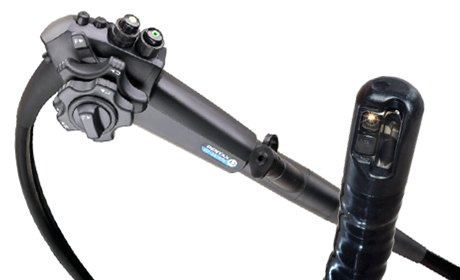
Supplemental Measures to Enhance Duodenoscope Reprocessing


The FDA has issued a safety communication to further help reduce the risk of infection transmission associated with duodenoscope use.  In this communication, the FDA recommends health care facilities performing endoscopic retrograde cholangiopancreatography (ERCP) evaluate whether they have the expertise, training and resources to implement one or more supplemental measures discussed at May’s Gastroenterology-Urology Devices Panel of the Medical Devices Advisory Committee meeting. Hospitals and health care facilities that utilize duodenoscopes can, in addition to meticulously following manufacturer reprocessing instructions, take one or more of these additional steps to further reduce the risk of infection and increase the safety of these medical devices.

Posted by Tim Sandle

Thursday, 6 August 2015

Pharmig News #60


Pharmig News has published its 60th edition, which marks 15 years of publishing news and views about Pharmaceutical Microbiology.

In the new edition is:
  • A review of 60 editions of Pharmig News by Tim Sandle
  • An update on Pharmig activities by David Keen
  • A report on the aseptic transfer sporicidal disinfection meeting, between Pharmig and the NHS by Tim Sandle
  • A profile of Brian Hayes
  • An in-depth regulatory round up, compiled by Tim Sandle
  • A feature on managing microbial risk in cosmetic production by Susan Birks
Copies have been sent to all Pharmig members. To request a copy or to find out more, please contact the Pharmig office.


Posted by Tim Sandle

Wednesday, 5 August 2015

ISO 9001 - final stage


The International Standards Organisation (ISO) recently released a statement stating that ISO 9001:2015 had progressed to the Final Draft International Stage (FDIS); the final stage in the revision process.  The FDIS contains the majority of the content that will be published in the full standard but there may still be some changes between the FDIS and the final publication. All going well the revised standard will be published in September.

Nigel Croft – Chair of the ISO subcommittee (ISO/TC 176/SC2) revising the standard has said that compared with the DIS the FDIS has:

“Relatively minor changes. The most extensive ones have been to the introduction and figures, which have been greatly simplified, with some of the explanatory text being moved to an informative Annex…..[there has been] a general ‘tidying-up’ of the overall text and greater consistency in the use of specific terms, there have been a number of small technical changes.”

ISO 9001:2015 will differ from previous versions of the standard as:
  • ISO 9001:1987 and 1994 were quite prescriptive with many specific requirements for documented procedures and records.
  • ISO 9001:2000 version focused on managing processes and required less documentation.
  • This was maintained in the 2008 version.
  • ISO 9001:2015 is even less prescriptive than ISO 9001:2008, with an underlying philosophy that output matters.
ISO 9001:2015 is very much performance-based. It focuses on what has to be achieved rather than how to achieve it. This has been achieved by combining the process approach with risk-based thinking and using the Plan-Do-Check-Act cycles at all levels in the organisation, while also taking the context in which the organisation operates into consideration.

Source: Antaris

Posted by Tim Sandle

New disinfectant standard for wipes


A new disinfectant standard has been issued for pre-saturated wipes. It forms part of the European disinfectant standards.

The standard is EN 16615:2015, titled: “Chemical disinfectants and antiseptics - Quantitative test method for the evaluation of bactericidal and yeasticidal activity on non-porous surfaces with mechanical action employing wipes in the medical area (4- field test) - Test method and requirements (phase 2, step 2).”


The standard was finalised on 1st May 2015.

The description for the standard reads:

“NEN-EN 16615 specifies a test method and the minimum requirements for bactericidal and yeasticidal activity of chemical disinfectant products that form a homogeneous, physically stable preparation when diluted with hard water - or in the case of ready-to-use products - with water. This European Standard applies to products that are used in the medical area for disinfecting non-porous surfaces including surfaces of medical devices by wiping - regardless if they are covered by the 93/42/EEC Directive on Medical Devices or not. This European Standard includes ‘ready-to-use wipes‘ which are impregnated with a microbicidal solution. This European Standard applies to areas and situations where disinfection is medically indicated. Such indications occur in patient care, for example: - in hospitals, in community medical facilities and in dental institutions; - in clinics of schools, of kindergartens and of nursing homes; and may occur in the workplace and in the home. It may also include services such as laundries and kitchens supplying products directly for the patients.”

Posted by Tim Sandle

Tuesday, 4 August 2015

Good Manufacturing Practice (GMP) data integrity


"Good Manufacturing Practice (GMP) data integrity: a new look at an old topic". On the MHRA website David Churchwood has written an article about the GMP aspects of electronic data systems and security.

Here is an excerpt:

"In addition to staff training and implementation of data integrity policies, consideration should be given to the organisational (eg procedures) and technical (eg computer system access) controls applied to different areas of the quality system. The degree of effort and resource should be commensurate with data criticality (how it is used) and inherent risk (how it is generated)."

The article can be accessed in full here.

Posted by Tim Sandle

Monday, 3 August 2015

Risks of non-endotoxin pyrogens


Although bacterial endotoxin remains the most ubiquitous pyrogenic substance in pharmaceutical processing, other microorganisms or microbial toxins can potentially present a pyrogenic risk, along with some chemicals. It is incumbent upon the pharmaceutical manufacturer to assess this. In a new paper, Tim Sandle considers these various risks. The abstract reads:

“This article considers pyrogens of microbial origin and the theoretical risks they pose to pharmaceutical products. The focus of the article IS with non-endotoxin pyrogens. The reasons for this are because of the voluminous content written about endotoxins and because non-endotoxin pyrogens often receive little discussion. Despite the low risk posed by non-endotoxin pyrogens, questions of their occurrence and risks are sometimes raised by regulators through inspections and by assessors during license changes and submissions. When such questions arise the pharmaceutical manufacturer is often called upon to undertake a risk assessment. Some of the information outlined within this article could be helpful in developing such an assessment.”


The reference is:

Sandle, T. (2015): Assessing Non-endotoxin Microbial Pyrogens in Relation in Pharmaceutical Processing. Journal of GXP Compliance, 19 (1): 1-10. Online at: http://www.ivtnetwork.com/article/assessing-non-endotoxin-microbial-pyrogens-relation-pharmaceutical-processing

If you are interested in viewing a copy, please contact Tim Sandle.

Posted by Tim Sandle

Sunday, 2 August 2015

FDA’s Stephen Ostroff on antibiotic stewardship


FDA acting commissioner Stephen Ostroff has “emphasized the critical importance of fighting anti-microbial resistance by encouraging the development of new antibiotics and diagnostics, combating false and substandard medicines, and discouraging inappropriate prescribing of disease treatments.”

In suggesting a greater international role for FDA, Ostroff has set out his thoughts in a feature published in Applied Clinical Trials.

The interesting article can be accessed in full here.

Posted by Tim Sandle

Saturday, 1 August 2015

Electric Bacteria


Scientists have found organisms that bypass metabolism entirely to eat and excrete pure electrons. Such organisms are family Geobacteraceae. Geobacter are anaerobic bacteria. The organisms have the ability to oxidize organic compounds and metals, including iron, radioactive metals and petroleum compounds into environmentally benign carbon dioxide while using iron oxide or other available metals as electron acceptor

Writing in BioTechnqiues, Jeffrey M. Perkel provides an overview of these organisms. The paper can be accessed in full here.

Posted by Tim Sandle

Special offers