Tuesday, 12 April 2016

Risk Management Guidelines


The European Medicines Agency (EMA) has revised module V of the good pharmacovigilance practices (GVP) on risk management systems based on insights from EMA’s Pharmacovigilance Risk Assessment Committee (PRAC). Public consultation on the revised guidelines is open until May 31, 2016.

The revision clarifies the requirements a risk management plan should focus on “to ensure that a risk-proportionate planning of activities directs resources to areas where the need for additional information and risk minimization is greatest. EMA states that the GVP module V should be read in conjunction with GVP module XVI, which focuses on tools for risk minimization.

EMA is also looking to amend the risk management plan template used by drug developers in order to focus the risk management system and simplify transfer of information to regulators. Public consultation on the revised template is also open until May 31, 2016.

See: EMA


 Posted by Dr. Tim Sandle

Monday, 11 April 2016

Endotoxin as an IIRMI


Kevin Williams has written a key article for BioPharm International, titled “The Emerging View of Endotoxin as an IIRMI.” This concerns the recognition that microbial artifacts are capable of modulating the mammalian immune system is an emerging view of biologic drug contamination control testing.

Here is an extract:

“The recognition that microbial artifacts are capable of modulating the mammalian immune system is an emerging view of biologic drug contamination control testing. The term IIRMI, or “innate immune response modulating impurity,” has been coined.  It is important to recognize that pyrogenicity is only one potential risk of endotoxin contamination and that immune activation is an inherent property of endotoxin, even in the absence of pyrogenicity. Immune stimulation of biologics is undesirable, as it can stimulate anti-drug antibodies against administered recombinant proteins. Historically, many methods have been used to “detoxify” endotoxin to remove the pyrogenicity of endotoxin while retaining its immune stimulation properties for adjuvant use in vaccines. This article gives a broad perspective for understanding potential risks from low endotoxin recovery (LER) and other potential detoxification methods and presents a new paradigm to help drive future testing.”

For details see: BioPharm


 Posted by Dr. Tim Sandle

Sunday, 10 April 2016

ISO 14644 Part 15 (cleanrooms) for public comment


The following draft international standard is now available for public comment - ISO 14644-15 Cleanrooms and associated controlled environments “Part 15: Assessment of suitability for use of equipment and materials by airborne chemical and surface chemical concentration.”

This document addresses the cleanroom classification of air cleanliness by chemical concentration to the suitability of equipment for use in cleanrooms and associated controlled environments.


Those interested should contact their local national standards body for a copy.


Posted by Dr. Tim Sandle

Saturday, 9 April 2016

Risk-Based Monitoring in Clinical Trials, 4th Edition


Applied Clinical Trials have issued a free e-book on clinical trials.  Applied Clinical Trials presents the latest issues that have risen to prominence since RBM adoption grows. This edition presents a well-rounded look at RBM including articles that describe current RBM trends; a survey of European CRAs, which shows the difficulties among sites and monitors with RBM; a comprehensive look at how sponsors and CROs can support their employees in the RBM transition, and closes with a case study on Novartis' use of adaptive monitoring.

For further details see: ACT


 Posted by Dr. Tim Sandle

Thursday, 7 April 2016

Good Documentation Practice


Siegfried Schmitt has written an interesting article for BioPharm International, titled “Good Documentation Practice: Saving Data for the Long Term.”

Here is an extract:

“Laboratory data may be in some proprietary format depending on the instrument on which they were generated. If this is the case, consider how the data can be read in years to come. It is neither practical nor feasible to maintain software programs that would enable these data to be read. It is highly unlikely that the software will still run on operating systems many years from now, nor will there be many operators who would know how to use the software. A potential solution may be to standardize the data, transferring it into a generic data format.

A key issue with archived data is maintaining a description or inventory of where the data belongs. Just because a file is named ‘injection 01 29 Oct 2011,’ this does not tell someone years from now that these data belong to the impurity profile for a stability sample for product xyz in month three for an accelerated study. How will you know what the data are, whether they are complete, and who created them and when? This demonstrates that there is no benefit in ‘dumping’ data in an archive--this must be done with the same diligence needed for archiving a paper document.”

For further details, see BioPharm


 Posted by Dr. Tim Sandle
Wednesday, 6 April 2016

Assess Alicyclobacillus Contamination in 2 to 3 h with GeneDisc® Method


Pall has released a new GeneDisc technology application for the relative quantification of Alicyclobacillus and the four main Alicyclobacillus spoiler strains in filterable samples within 2 to 3 hours.

Ingredient and beverage industries can achieve higher profitability with this new informative protocol enabling effective decision making with early in-process controls at critical points of production flow:

Highly contaminated products can be diverted in real time for further processing to eliminate or reduce the risk to an acceptable level
Efficacy of countermeasure for TAB contamination reduction can be evaluated
Final product contamination can be quantified

Combined with already available protocols for detection of TAB Spoilage, the GeneDisc method is a complete and flexible tool for controlling beverage processes impacted by Alicyclobacillus contamination.

Quantification: Confirm relative Alicyclobacillus level in filterable samples in as fast as 2 to 3 hours

Detection: Detect the presence of over 200 Alicyclobacillus strains in filterable and unfilterable samples using this highly sensitive test

Identification: Individually and simultaneously identify the four specific Alicyclobacillus species most often associated with spoilage including A. acidoterrestris, A. acidophilus, A. cycloheptanicus, A. herbarius.

For further details see: Pall


Posted by Dr. Tim Sandle

Monday, 4 April 2016

Bacteriophages offer an Antimicrobial Solution


One potential area for antimicrobial therapy, which takes a different direction to the search for new compounds, is with bacteriophages: viruses that have the ability to infect and fight harmful bacteria.

In relation to this, Tim Sandle has written a short review looking at bacteriophages.

The reference is:

Sandle, T. (2016) Bacteriophages offer an Antimicrobial Solution, Journal of Microbiology & Experimentation, 3 (1): 1-2 (DOI: 10.15406/jmen.2016.03.00077)

The paper can be accessed here.


Posted by Dr. Tim Sandle

Saturday, 2 April 2016

Identification of Clostridium species


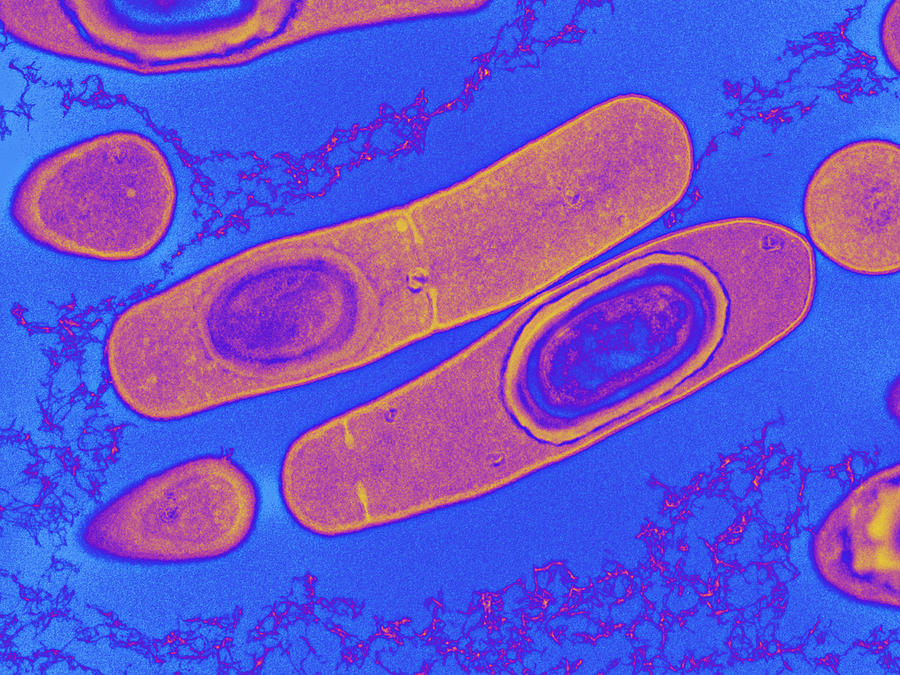
The genus Clostridium belongs to the family Clostridiaceae and it currently contains 203 species and 5 subspecies, with only a few species being pathogenic to humans. Of these species, 21 have been reclassified to other genera, 5 have been reclassified within the genus and 1 has been de-accessioned.

Medically significant Clostridium strains tend to be Gram positive rods (some are Gram variable), 0.3 – 2.0 x 1.5 – 20.0μm which are often arranged in pairs or short chains, with rounded or sometimes pointed or square ends. They are commonly pleomorphic and vary considerably in their oxygen tolerance.

In relation to the identification of Clostridium species, Public Health England have produced a guidance booklet.

The booklet can be accessed here.


 Posted by Dr. Tim Sandle

Thursday, 31 March 2016

Ph. Eur. Commission adopts revised monograph on Water for Injections


During its 154th Session, the Ph. Eur. Commission adopted a revision of its monograph for Water for Injections (0169). Up to now, the production of Water for Injections (WFI) had been limited to distillation only. The revision allows for production of WFI by a purification process equivalent to distillation such as reverse osmosis, coupled with appropriate techniques. The revised monograph will be published in the Ph. Eur. Supplement 9.1 and will become effective in April 2017.

For further details see: Ph. Eur.


Posted by Dr. Tim Sandle

Current Perspectives USP Microbial Identification


Microbial identification is the determination of the broad group (eg, bacteria, yeast, or mold) or narrow group (e.g., genus and / or species) to a qui microorganism belongs to.

Microbial characterization is the use of colony growth, cellular morphology, differential staining, and key diagnostic features to characterize a laboratory isolate for trending and investigative Purposes without identification, example, nonpathogenic Staphylococci.

Microorganisms, if detected in drug substances, excipients, water for pharmaceutical use, the manufacturing environment, intermediates, and finished drug products, UNDERGO typically characterization. This May include identification and strain typing, as considers.

In relation to the above, Radhakrishna S. Tirumalai, Ph.D. has written an interesting article for the magazine La Vague. The article can be found here.

Posted by Dr. Tim Sandle

Wednesday, 30 March 2016

Transmission of CJD and Variant CJD by Blood and Blood Products


A new FDA guidance document has been issued: “Revised Preventive Measures to Reduce the Possible Risk of Transmission of CJD and Variant CJD by Blood and Blood Products.”

Tests are being developed to detect CJD and vCJD infections in blood and plasma donors. However, until suitable donor screening tests become available, FDA continues to recommend interim preventive measures based on the available scientific data and the evolving state of knowledge regarding these diseases. FDA may update this guidance in the future, in light of developments in testing technology, epidemiological information, and the impact of these recommendations on the supply of blood and blood-derived products.

For details see: FDA

Posted by Dr. Tim Sandle

Tuesday, 29 March 2016

Pharmig News No. 62


A new edition of Pharmig News (issue 62) has been issued. In this edition:
  • Use of rapid versus traditional microbiological methods by Lynne Murdoch
  • New standards and best practice for pharmaceutical manufacture by Susan Birks
  • The mycobiome – mapping fungi on human skin by Tim Sandle
  • Plus the usual regulatory round-ups and industry news.

Copies have been sent to member organizations. If you are not a member of Pharmig and wish to see a copy, please contact the Pharmig office.

Posted by Dr. Tim Sandle

Monday, 28 March 2016

New estimates of microbial numbers in our bodies


A new finding puts forward a more even ratio of one-to-one for the relationship between human cells in the body and microorganisms. To illustrate this, the researchers took a ‘typical man’ as a reference point. Imagine a man who weighs 70 kilograms, is aged between 20–30 years old and stands 1.7 metres tall. This man, microbiologists Ron Milo, Shai Fuchs and Ron Sender calculate is made up of around 30 trillion human cells and 39 trillion bacteria.

Tim Sandle explores the relationship between microorganisms and human cells in a new article published in Microbioz India. The reference is:

Sandle, T. (2016) New estimates of microbial numbers in our bodies, Microbioz India, Vol. 3, pp9-13

For details see: Microbioz India.


Posted by Dr. Tim Sandle

Sunday, 27 March 2016

New Species Of Lyme Disease Causing Bacteria


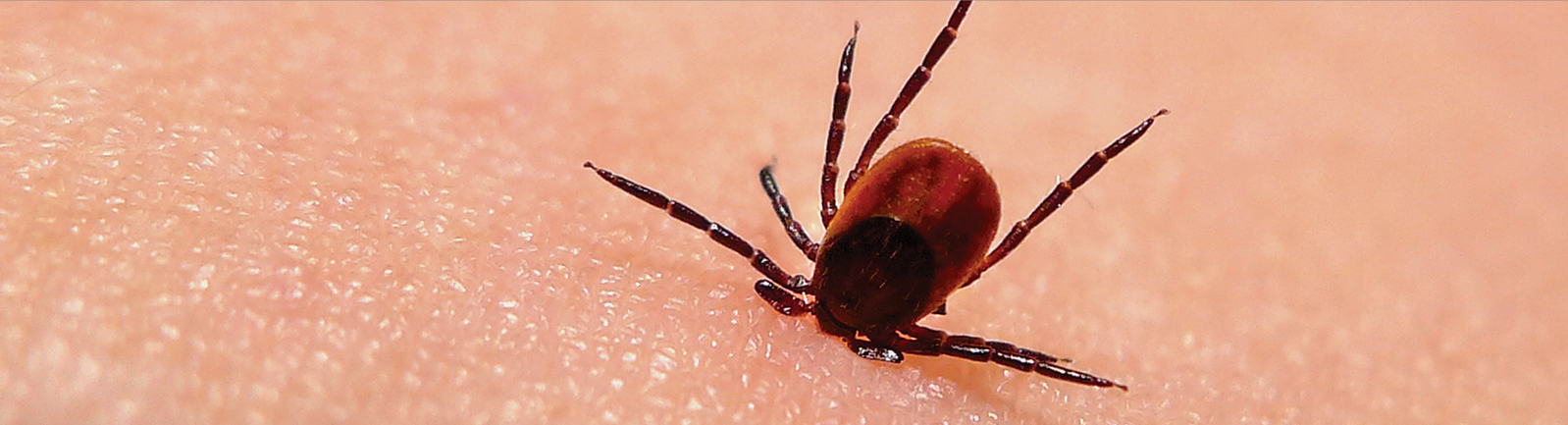
A new species of bacteria that causes Lyme disease has been discovered by Mayo Clinic scientists, in collaboration with the U.S. Centers for Disease Control and Prevention. The new species is provisionally named Borrelia mayonii. Before the discovery, the only other species known to cause Lyme disease was an organism called Borrelia burgdorferi.

Lyme disease is transmitted to people via the bite of a black-legged tick, called the deer tick. The disease leads to headache, rash, and neck pain. In serve cases it can lead to deliberating arthritis. Treatment is by antibiotics. In recent years, the disease has spread considerably across the U.S., covering a larger geographical area.

The discovery came about after medical researchers examined samples from U.S. patients taken during the period 2003 to 2014. For this, a molecular biology technique called polymerase chain reaction (PCR) was used. Of the samples screened, 6 of 9,000 samples, taken from residents of Minnesota, North Dakota and Wisconsin, showed a different pattern.

The differences led to the discovery of the new organism - B. mayonii. Although the bacterium has probably been present for some time, it has hitherto escaped detection. As well as the classic Lyme disease symptoms, B. mayonii causes nausea and vomiting, and a different type of rash. In addition, for those infected, the concentration of bacteria in the blood is higher.

The research is published in the journal The Lancet Infectious Diseases, in a paper titled ‘Identification of a novel pathogenic Borrelia species causing Lyme borreliosis with unusually high spirochaetaemia: a descriptive study.’

Posted by Dr. Tim Sandle

Friday, 25 March 2016

Legionella scheme: sample instruction


Legionellosis is a collective term for diseases caused by legionella bacteria including the most serious Legionnaires’ disease, as well as the similar but less serious conditions of Pontiac fever and Lochgoilhead fever. Legionnaires’ disease is a potentially fatal form of pneumonia and everyone is susceptible to infection. The risk increases with age but some people are at higher risk.

The bacterium Legionella pneumophila and related bacteria are common in natural water sources such as rivers, lakes and reservoirs, but usually in low numbers. They may also be found in purpose-built water systems such as cooling towers, evaporative condensers, hot and cold water systems and spa pools.

If conditions are favourable, the bacteria may grow increasing the risks of Legionnaires’ disease.

Public Health England have produced a Legionella isolation scheme: sample instruction sheet. This will be useful to clinical laboratories. The sheet, available in different languages, can be found here.

Posted by Dr. Tim Sandle

Special offers