Thursday, 2 March 2017

European and US regulators agree on mutual recognition of inspections

Important news for those who work in organizations that regularly receive both U.S. FDA and European medicines agency inspectors. This has been a long time coming...a new transatlantic agreement is now in place, designed to will help to make better use of inspection capacity and reduce duplication.

This means Regulators in the European Union (EU) and the United States (US) have agreed to recognize inspections of manufacturing sites for human medicines conducted in their respective territories on both sides of the Atlantic.

Here is a press release from the European Medicines Agency (dated March 2, 2017):

Each year, national competent authorities from the EU and the US Food and Drug Administration
(FDA) inspect many production sites of medicinal products in the EU, the US and elsewhere in the world, to ensure that these sites operate in compliance with good manufacturing practice (GMP). Under the new agreement, EU and US regulators will rely on each other’s inspections in their own territories. In future, the need for an EU authority to inspect a site located in the US, or vice versa, will be limited to exceptional circumstances.

The agreement will enable both the EU authorities and the FDA to make better use of their inspection resources to help them to focus on other parts of the world where active pharmaceutical ingredients (APIs) and medicines for the EU or US markets are manufactured. This will ensure that patients can rely on the quality, safety and efficacyof all medicines, no matter where they have been produced. Around 40% of finished medicines marketed in the EU come from overseas and 80% of the manufacturers of APIs for medicines available in the EU are located outside the Union.

In the EU, inspections of manufacturing sites are carried out by national competent authorities from EU Member States. The European Medicines Agency plays an important role in coordinating these activities in collaboration with Member States.

The agreement is underpinned by robust evidence on both sides of the Atlantic that the EU and the US have comparable regulatory and procedural frameworks for inspections of manufacturers of human medicines. Teams from the European Commission, EU national competent authorities, EMA and the US FDA have been auditing and assessing the respective supervisory systems since May 2014, and have worked closely together to reach this agreement.

The agreement is an annex to the EU-US MRA which was signed in 1998 but is not yet implemented. Many provisions of the agreement have already entered into force and others will enter into force on November 1, 2017. By that date, the EU will have completed its assessment of the FDA and the FDA is expected to have completed its assessment of at least eight EU Member States, and will be gradually expanded to all Member States. The text of this agreement is now published on the website of the European Commission’s Directorate General for Trade.

Source: EMA


Posted by Dr. Tim Sandle

Monday, 27 February 2017

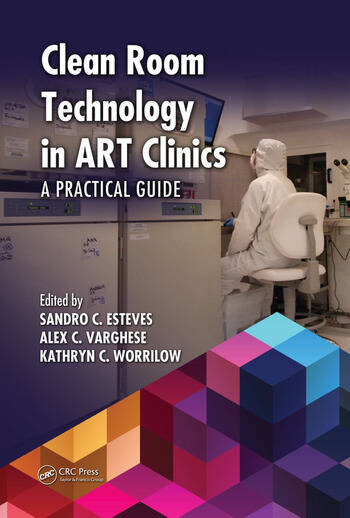
Clean Room Technology in ART Clinics: A Practical Guide


A new book of interest 'Clean Room Technology in ART Clinics: A Practical Guide', edited by Sandro C. Esteves, Alex C. Varghese, Kathryn C. Worrilow.

Regulatory agencies worldwide have issued directives or such requirements for air quality standards in embryology laboratories. This practical guide reviews the application of clean room technology or controlled environments specifically suited for Assisted Reproductive Technology (ART) Units. Its comprehensive coverage includes material on airborne particles and volatile organic compounds, including basic concepts, regulation, construction, materials, certification, clinical results in humans, and more.

Tim Sandle has contributed a chapter, titled 'Clean room design principles: Focus on particulates and microbials'.

Further details about the book can be found here.

Sandle, T. (2017) Clean room design principles: Focus on particulates and microbials. In Esteves, S. C., Varghese, A. C., and Worrilow, K. C. (Eds.) Clean Room Technology in ART Clinics: A Practical Guide, CRC Press, Boca Raton, U.S., pp75-91

Posted by Dr. Tim Sandle

Monday, 20 February 2017

The European approach to disinfectant qualification


Tim Sandle has written an overview of the European approach to disinfectant testing for the A3P publication La Vague.

Here is the introduction:

Contamination control is of great importance to healthcare facilities and to pharmaceutical cleanrooms. One way of ensuring the hygiene is maintained is through a cleaning and disinfection regime. After a disinfectant has been chosen based on its chemical properties and expected performance/effectiveness, each disinfectant should be validated to ensure its efficacy. Efficacy is demonstrated through performance testing to show that the disinfectant is capable of reducing the microbial bioburden in either suspension (planktonic state) or from cleanroom surfaces to an acceptable level.

The article can be read here.


Posted by Dr. Tim Sandle


Thursday, 16 February 2017

New target for taming Ebola


A team of scientists led by Ronald Harty, a professor of pathobiology and microbiology at the University of Pennsylvania's School of Veterinary Medicine, has identified a mechanism that appears to represent one way that host cells have evolved to outsmart infection by Ebola and other viruses. In a new paper, he and colleagues reveal that host cells sequester viral proteins away from the plasma membrane within the cell, thus preventing viruses from spreading.

Harty says that finding a way to amplify this molecular interaction could lead to a novel antiviral strategy against Ebola that could temper the pathogen's damage.

The scientists knew that, in infections with Ebola as well as many other viruses, including Marburg, rabies and HIV, viral matrix proteins, such as Ebola VP40, interacted with host proteins through short protein motifs: the PY motif on the viral protein and the WW motif on the host cell protein. Prior to this current study, all of the known interactions enabled the virus to bud efficiently from the cell.

In the current work, the researchers screened for new WW motifs from mammalian cell proteins that bound tightly to the PY motif of Ebola virus' VP40 protein. Not every PY motif binds to every WW domain; the interaction is specific, like a lock and key.

The screen turned up some proteins that the Penn team had explored before but also a new one, a protein called BAG3, known as a chaperone protein, which under normal physiological conditions acts to promote cell survival.

After confirming that Ebola VP40 interacted with full-length BAG3 in mammalian cells specifically via the WW domain, the researchers went on to test its functionality in influencing budding. They used a test that avoids manipulating the actual Ebola virus, which is too dangerous for the Penn Vet laboratory. Instead, they examined virus-like particles, which are produced by the virus's matrix protein, VP40, and are not infectious but accurately mimic the budding step of infection.

When the researchers examined cells expressing either Ebola or Marburg VP40 and then added in BAG3, they found that VLP budding went down in a dose-dependent manner. When they mutated the WW domain of BAG3 so it couldn't interact with VP40's PY domain, budding levels remained unchanged.

Knocking down levels of naturally occurring BAG3 with synthetic strands of RNA did just the opposite, increasing budding.

"With all of these assays, there was a consistent effect on budding levels, either up or down," Harty said.

Enhancing such an interaction, perhaps in combination with other therapies that attack the virus at other stages of its life cycle, could give the immune system the opening it needs to overcome an infection.

Using confocal microscopy and fluorescently labeled proteins, the scientists discovered that BAG3 appeared to be sequestering VP40 in the cell's cytoplasm away from the plasma membrane where the viral particles would need to go in order to bud off and spread to infect other cells. Their work identified BAG3 as the first WW containing host protein to negatively affect virus budding.

Although the group has not yet tested the VP40-BAG3 interaction with live Ebola or Marburg virus -- those experiments are planned -- they did find that BAG3 limits budding of a recombinant vesicular stomatitis virus that contains the Ebola PY motif.


"We used that to show that this works in a live virus infection," Harty said. "Taken together, we're hoping and assuming that it works the same way with the authentic Ebola virus."

In addition to testing BAG3 interactions with the Ebola and Marburg virus, Harty's lab also plans to further investigate what BAG3 is doing to VP40, whether it's simply sequestering it or whether it's modifying or degrading it.

See:

Jingjing Liang, Cari A. Sagum, Mark T. Bedford, Sachdev S. Sidhu, Marius Sudol, Ziying Han, Ronald N. Harty.Chaperone-Mediated Autophagy Protein BAG3 Negatively Regulates Ebola and Marburg VP40-Mediated Egress. PLOS Pathogens, 2017; 13 (1): e1006132 DOI:10.1371/journal.ppat.1006132

Posted by Dr. Tim Sandle

Wednesday, 15 February 2017

Good Practice Guidelines for Blood Establishments


EU directive integrates Council of Europe Good Practice Guidelines for blood establishments

Good Practice Guidelines have been prepared through co-operation between the European Directorate for the Quality of Medicines & HealthCare of the Council of Europe (EDQM) and the Commission of the European Union (EU). The elaboration of the Good Practice Guidelines included substantial public consultations giving stakeholders an opportunity to comment on the draft version.

The Good Practice Guidelines were adopted by the European Committee (Partial Agreement) on Blood Transfusion (CD-P-TS) of the Council of Europe during its plenary session in November 2016. The document is an integral part of the 19th Edition of the Council of Europe Guide to the Preparation, Use and Quality Assurance of Blood Components, Appendix to Recommendation No. R (95) 15 of the Committee of Ministers, referred to below as the “Guide”.

Following adoption of the Good Practice Guidelines by the European Commission, European Union and European Economic Area Member States shall ensure that Blood Establishments take fully into account the standards and specifications set out in those Guidelines when implementing their quality system, in line with the new Commission Directive (EU) 2016/1214. In order to bring into force the laws, regulations and administrative provisions necessary to comply with this Directive by 15 February 2018, some member states need to translate the text of the Good Practice Guidelines into their national language. To expedite this process, a verbatim copy of the text of the Good Practice Guidelines that will be published in the Guide is downloadable as a document here.

Posted by Dr. Tim Sandle

Sunday, 12 February 2017

Antimicrobial resistant bacteria detected in air pollution


Areas subject to air pollution contain a growing concentration of bacteria that are resistant to antimicrobials, according to a new study. Consequently, air movement may provide a new ways for their transmission.
By Tim Sandle

The study, highlighting a growth in airborne or air-carried antimicrobial resistant bacteria, has come from China, with a focus on Beijing. The extent of antimicrobial resistance has been assessed at the genetic level, with the detection of DNA from genes that make bacteria resistant.
The study has been led by Professor Joakim Larsson, of the Sahlgrenska Academy and the University of Gothenburg. Professor Larsson is especially concerned about air as a potential vector for spreading antimicrobial resistant pathogens.
Antimicrobial resistance (including resistance to antibiotics) is the biggest risk faced by human societies. The implications are that life expectancy could fall due to people dying from diseases that are readily treatable today.
With the new research, Professor Larsson’s team tested air samples for genes that make bacteria resistant to antibiotics. From a total of 864 samples, DNA was tested and related back to its source. One area of concern was the detection of a series of genes that provide resistance to carbapenems. These are a group of ‘last resort antibiotics’ and they are administered for infections caused by bacteria that the most resistant to antimicrobials. Carbapenems are members of the beta lactam class of antibiotics, which kill bacteria by binding to penicillin-binding proteins and inhibiting cell wall synthesis.
Importantly, the findings cannot indicate if the bacteria are alive in the air. This narrows the risk somewhat; however, the potential for genetic transfer with viable bacteria, upon contact, remains.
The study is, however, only a starting point. The researchers plan to assess whether antimicrobial resistance can indeed spread through air. Here the focus will move to a study of the air within the vicinity of European sewage treatment plants. Sewage plants are regularly called out as potential sites for the spread of antimicrobial resistance. This is because, with so many different types of bacteria coming together in sewage plants, this provided optimal conditions for organisms to swap genes that confer resistance. This also means antibiotic-resistant bacteria could evolve much faster than they would in isolation.
Data will be cross-checked in relation to the air and to the sewage. Additional samples will be taken from people who live in close proximity to sewage plants.
The research findings are published in the journal Microbiome and the research paper is titled “The structure and diversity of human, animal and environmental resistomes.”

Thursday, 9 February 2017

New surgical mask renders viruses harmless


Hyo-Jick Choi, a professor in the University of Alberta Department of Chemical and Materials Engineering, noticed that many people wear a simple surgical-style mask for protection during outbreaks of influenza or other potentially deadly viruses such as severe acute respiratory syndrome (SARS) or Middle East respiratory syndrome (MERS).

Trouble is, the masks weren't designed to prevent the spread of viruses.

"Surgical masks were originally designed to protect the wearer from infectious droplets in clinical settings, but it doesn't help much to prevent the spread of respiratory diseases such as SARS or MERS or influenza," says Choi.

Airborne pathogens like influenza are transmitted in aerosol droplets when we cough or sneeze. The masks may well trap the virus-laden droplets but the virus is still infectious on the mask. Merely handling the mask opens up new avenues for infection. Even respirators designed to protect individuals from viral aerosols have the same shortcoming -- viruses trapped in respirators still pose risks for infection and transmission.

Masks capable of killing viruses would save lives, especially in an epidemic or pandemic situation. During the 2014-2015 season nearly 8,000 Canadians were hospitalized with the flu. That same year, deaths related to influenza in Canada reached an all-time high of nearly 600.

Knowing that the masks are inexpensive and commonly used, Choi and his research team went about exploring ways to improve the mask's filter. And this is where a problem he is struggling with in one field of research -- the development of oral vaccines like a pill or a lozenge -- became a solution in another area.

A major hurdle in the development of oral vaccines is that when liquid solutions dry, crystals form and destroy the virus used in vaccines, rendering the treatment useless. In a nifty bit of engineering judo, Choi flipped the problem on its head and turned crystallization into a bug buster, using it as a tool to kill active viruses.

Choi and his team developed a salt formulation and applied it to the filters, in the hope that salt crystals would "deactivate" the influenza virus.

The mechanics of simple chemistry make the treatment work. When an aerosol droplet carrying the influenza virus contacts the treated filter, the droplet absorbs salt on the filter. The virus is exposed to continually increasing concentrations of salt. As the droplet evaporates, the virus suffers fatal physical damage when the salt returns to its crystalized state.

While developing solid vaccines, Choi observed that sugar used for stabilizing the vaccine during the drying process crystalizes as it dries out. When crystals form, sharp edges and spikes take shape and they physically destroy the virus vaccine.

"We realized that we could use that to our advantage to improve surgical masks," said Choi.

In a series of experiments and tests at the University of Alberta and in the Department of Medical Zoology at the Kyung Hee University School of Medicine in Seoul, South Korea, the team arrived at a perfect treatment that improves the efficacy of the fibre filter inside the masks.

By using a safe substance (table salt) to improve an existing, approved product, Choi sees very few roadblocks to implementing the innovation.

For further details see:

Fu-Shi Quan, Ilaria Rubino, Su-Hwa Lee, Brendan Koch, Hyo-Jick Choi. Universal and reusable virus deactivation system for respiratory protection. Scientific Reports, 2017; 7: 39956 DOI: 10.1038/srep39956


Posted by Dr. Tim Sandle

Monday, 6 February 2017

Disinfectants: Properties, Applications and Effectiveness


A new book of interest has been published,m titled "Disinfectants: Properties, Applications and Effectiveness." The book is edited by Ana Sofia Cardoso, Cristina Maria Martins Almeida, Telma Costa Cordeiro, and Vanessa de Jesus Gaffney. The book is published by Nova, New York.

Antiseptics and disinfectants are extensively used at home, in occupied buildings, recreational areas, industries (the water industry, food processing industry and pharmaceutical industry, among others), hospitals and other healthcare settings for a variety of topical and hard-surface applications. They play a critical role in controlling the spread of environmentally transmitted pathogens in healthcare and food-processing environments, as well as at home. A wide variety of active chemical agents are found in these products, many of which have been used for hundreds of years for antisepsis, disinfection, and preservation.

Although its main purpose is to control human exposure to microorganisms through preventive action, its use should also be carefully controlled in order to prevent healthcare problems that may consequently emerge due to their toxicity.

The problems regarding the use of disinfectants are not new, although unquestionably tangible and pertinent, due to its broad application in the referred economical activities, as well as due to the development and emerging of new compounds with this activity.

This book aims to address the various scenarios regarding the use of disinfectants. Accordingly, through its eleven chapters it is possible to become aware of the wide range of disinfectant applications, as well as the concerning advantages and limitations of its use. This book is divided into two main sections. The first section, after an overview regarding the use of disinfectants in society, addresses questions related to its toxicology and health repercussions along with microbiological mechanisms.

In the second section, a far-reaching exploration of the application of disinfectants in a set of specifically selected economic activities, alongside issues concerning their environmental impact and regulatory matters is addressed. This section also includes two case studies on novel disinfection methods.

Tim Sandle has contributed a chapter on disinfectants in the pharmaceutical sector. The reference is:

Sandle, T. (2016) Disinfectants in the Pharmaceutical Industry. In Cardoso, A. S., Almeida, C. M. M., Cordeiro, T. C. and  Gaffney, V.J.  (Eds.) Disinfectants: Properties, Applications and Effectiveness, Nova Science Publishers, New York, pp109-142

The book is available via Amazon:


Posted by Dr. Tim Sandle

Sunday, 5 February 2017

Innovative Strategies for Reducing Nasal Colonization


Staphylococcus aureus (S. aureus) and methicillin resistant S. aureus (MRSA) can cause difficult-to-treat infections due to their antibiotic resistance. Approximately 90,000 people are affected yearly, and 20,000 people die from infections caused by bacteria like MRSA. Research shows that nasal antiseptics are a highly effective means of reducing nasal colonization of bacteria and subsequent infection.

Methicillin-resistant Staphylococcus aureus (MRSA) is a bacterium responsible for several difficult-to-treat infections in humans. MRSA is any strain of Staphylococcus aureus that has developed, through horizontal gene transfer and natural selection, multi- resistance to beta-lactam antibiotics, which include the penicillins (methicillin, dicloxacillin, nafcillin, oxacillin, etc.) and the cephalosporins. MRSA evolved from horizontal gene transfer of the mecA gene to at least five distinct S. aureus lineages. Strains unable to resist these antibiotics are classified as methicillin-susceptible Staphylococcus aureus, or MSSA. The evolution of such resistance does not cause the organism to be more intrinsically virulent than strains of S. aureus that have no antibiotic resistance, but resistance does make MRSA infection more difficult to treat with standard types of antibiotics and thus more dangerous.

This following paper details the impacts of hospital acquired infections financially and medically, and provides proven strategies on achieving nasal decolonization.

Posted by Dr. Tim Sandle

Saturday, 4 February 2017

Captive monkeys gain human microbiomes


To explore how a microbiome adapts to a new environment, University of Minnesota researcher Dan Knights and his colleagues turned their attention to nonhuman primates.

According to Bioscience Techniques, the team examined the microbiota from two species of monkeys living in a zoo, in a sanctuary, or in the wild using shotgun sequencing. The data showed that monkeys living in the wild possessed broad, diverse microbial signatures, while the animals living in sanctuaries showed considerably less variety. Interestingly, monkeys living in zoos showed even less diversity, with their microbes actually resembling signatures found in modern humans. A follow-up study of 33 monkeys representing 8 different species raised in a zoo showed a similar microbial complement.

For further details see:

Clayton JB, Vangay P, Huang H, Ward T, Hillmann BM, Al-Ghalith GA, Travis DA, Long HT, Tuan BV, Minh VV, Cabana F, Nadler T, Toddes B, Murphy T, Glander KE, Johnson TJ, Knights D. Captivity humanizes the primate microbiome. Proc Natl Acad Sci U S A. 2016 Sep 13;113(37):10376-81.

Posted by Dr. Tim Sandle

Friday, 3 February 2017

Scientists tissue-engineer functional part of human stomach


Scientists have used pluripotent stem cells to generate human stomach tissues in a Petri dish that produce acid and digestive enzymes. They grew tissues from the stomach's corpus/fundus region. The study comes two years after the same team generated the stomach's hormone-producing region (the antrum). The discovery means investigators now can grow both parts of the human stomach to study disease.

The discovery means investigators now can grow both parts of the human stomach to study disease, model new treatments and understand human development and health in ways never before possible.

See:

Kyle W. McCracken, Eitaro Aihara, Baptiste Martin, Calyn M. Crawford, Taylor Broda, Julie Treguier, Xinghao Zhang, John M. Shannon, Marshall H. Montrose, James M. Wells. Wnt/β-catenin promotes gastric fundus specification in mice and humans. Nature, 2017; DOI: 10.1038/nature21021

Posted by Dr. Tim Sandle

Monday, 30 January 2017

Secret code language of bacteria revealed


Antibiotic resistance in pathogenic bacteria is a growing global challenge. Danish researchers have now discovered that bacteria use a code language to avoid being controlled. Understanding this code language will be paramount to developing new antibiotics in the future.

Pathogenic bacteria -- such as those that cause tuberculosis and typhoid fever -- use a variety of clever tricks against our immune system and the antibiotics we use to control them.

One of these tricks is the ability to go "under cover" and hide from the immune system and the treatment by going into a dormant state where they are not discovered. For several years, researchers at Aarhus University have studied the molecular mechanisms that enable bacteria to hide in this way, and new research now suggests that they also make use of code language in their attempt to avoid being controlled.

A palindrome is a word that reads the same both forwards and backwards, such as the word "kayak." In close collaboration with other leading researchers in bacterial physiology and bioinformatics at the University of Copenhagen and Aarhus University, a research team at the Department of Molecular Biology and Genetics at Aarhus University, Denmark, led by Associate Professor Ditlev Egeskov Brodersen, has discovered that a large number of pathogenic bacteria use cryptic palindromes embedded in the sequence of amino acids in their proteins to determine whether the dormant state should be established or interrupted.

The results have just been published in the journal Nucleic Acids Research, and include detailed three-dimensional structures of specific cell toxins that are activated during treatment with for example antibiotics, and demonstrate what happens to them when they bind to specific regions of the DNA of the bacterial cells. The toxins are usually kept in check by their partners, the so-called "anti-toxins," and the researchers have discovered that the palindrome codes enable the anti-toxins to block two toxins at the same time. The amino acid sequence of the codes fits as a key in a lock, and the palindromic sequence is necessary because the two toxins to be blocked are rotated 180 degrees relative to each other.

And moreover, it seems that such codes are present in unprecedented numbers among bacteria. In the analysis of over 4,000 bacterial genomes, the researchers have further shown that up to 1/4 of all known bacteria use such codes in their constant struggle for survival. Therefore, the research results indicate that a better understanding of the code language of the bacteria is necessary to increase the possibilities of developing new antibiotics in the future.

See:

Kirstine L. Bendtsen, Kehan Xu, Majbritt Luckmann, Kristoffer S. Winther, Shiraz A. Shah, Christian N. S. Pedersen, Ditlev E. Brodersen. Toxin inhibition in C. crescentus VapBC1 is mediated by a flexible pseudo-palindromic protein motif and modulated by DNA binding. Nucleic Acids Research, 2016; gkw1266 DOI: 10.1093/nar/gkw1266

Posted by Dr. Tim Sandle

Friday, 27 January 2017

Gene transfer on the fungal highway


Soil bacteria use the extensively branched, thread-like structures of fungi to move around and access new food sources. In a new study, researchers have been able to demonstrate that these so-called fungal hyphae also form a hot spot for gene transfer between bacteria. In this way, fungi ensure high bacterial diversity in the soil – which can also be beneficial for the degradation of pollutants.

In their research, the UFZ scientists were also able to show that much greater gene transfer takes place between bacteria on the fungal highway than in a moist environment without fungal hyphae. Using computer models that calculate the frequency of gene transfer between bacteria on the hyphae, the researchers came to the same result. Wick continues: "Our study shows that fungal hyphae not only provide soil bacteria with an excellent infrastructure, but also a potential hot spot for bacterial horizontal gene transfer. This previously unknown aspect of fungus-bacteria interaction is an important step towards understanding the complex interactions between soil-dwelling microorganisms."

Fungi therefore may play a very important role in the highly complex soil habitat: in the spread of soil bacteria, their genetic adaptation and diversity, and ultimately also their evolution.

For further details see:

Tom Berthold, Florian Centler, Thomas Hübschmann, Rita Remer, Martin Thullner, Hauke Harms, Lukas Y. Wick.Mycelia as a focal point for horizontal gene transfer among soil bacteria. Scientific Reports, 2016; 6: 36390 DOI: 10.1038/srep36390

Posted by Dr. Tim Sandle

Wednesday, 25 January 2017

Ph. Eur. Commission aimed to reduce animal testing


The recent adoption at its 156th session of the following texts demonstrates the Commission’s commitment to the replacement, reduction and refinement of animal tests in the quality control of medicines.
  • Ph. Eur. General Chapter Adopted: Substitution of in vivo methods by in vitro methods for the quality control of vaccines (5.2.14)
  • Revisions of the general texts on Tests for extraneous agents in viral vaccines for human use (2.6.16) and Cell substrates for the production of vaccines for human use (5.2.3)
See the Press Release for full details
 
More about the Ph. Eur. work programme

Sunday, 22 January 2017

Microbiology: An oral history


A BBC radio program about the history of microbiology is available for download as an mp3:

Melvyn Bragg and guests discuss the history of microbiology. We have more microbes in our bodies than we have human cells. We fear them as the cause of disease, yet are reliant on them for processes as diverse as water purification, pharmaceuticals, bread-making and brewing. In the future, we may look to them to save the planet from environmental hazards as scientists exploit their ability to clean up pollution. For microbes are the great recyclers on the earth, processing everything – plants, animals and us. Without microbes life would grind to a halt. How did we first discover these invisible masters of the universe? The development of microscopes in the 17th Century played a key part, but for a while science seemed stuck in this purely observational role. It is only when Louis Pasteur and Robert Koch began to manipulate microbes in the lab two hundred years later that stunning advances were made. These breakthroughs led to an understanding of how microbes transform matter, spread disease and also prevent it with the development of antibiotics and vaccines.With John Dupré, Professor of Philosophy of Science at Exeter University; Anne Glover, Professor of Molecular and Cell Biology at Aberdeen University; and Andrew Mendelsohn, Senior Lecturer in the History of Science and Medicine at Imperial College, University of London.

To listen, go to: BBC radio

Posted by Dr. Tim Sandle

Special offers