Saturday, 13 July 2013

Particle Monitoring in Pharmaceutical Cleanrooms


The production of sterile pharmaceuticals is carried out in various classes of cleanrooms. The most critical operation is during aseptic preparation and filling. Particle counting, microbiological monitoring, temperature, relative humidity and pressure differential measurements must be monitored during the production of these drugs.

To review the application of particle counters, Morgan Polen has written an introduction to the subject. The paper has been hosted by the company Lighthouse

Posted by Tim Sandle

Friday, 12 July 2013

The Benefits of Isolator and Aseptic Processing

Isolators have been around the Pharmaceutical Industry since the early 1980s and in the Nuclear Industry (glovebox technology) since the 1950s. The intent of isolators is to create an airtight barrier or enclosure around a piece of equipment or process which provides absolute separation between the operator and product. The operator can perform tasks through half-suits or glove ports. Isolators provide a specific environment inside the isolator using HEPA filters.

In relation to isolators, Gary Partington has written a presentation about utilizing isolators for pharmaceutical processing.

Posted by Tim Sandle

Thursday, 11 July 2013

Variability in sterility test processes

Modular sterility test systems provide the flexibility to handle different product sample types and varying scales of production capacity depending on the system configuration or material transfer method used.

In relation to the newer systems appearing on the market, James Drinkwater has written a white paper, within which he demonstrates that having modular sterility test barrier separation designs can provide operational flexibility, enabling managed in-process transfers of different test sample types with varying batch process throughput.

Posted by Tim Sandle

Wednesday, 10 July 2013

The Challenges With Real-Time Viable Particle Counters


Real-time viable particle detectors use optical techniques to determine particle viability on a particle-by-particle basis. Real-time viable particle detectors use the intrinsic fluorescence of microbial constituents associated with cell viability to analyze environmental particles entrained in the aerosol sample flow path.

A key point with the technology is with the validation. Evaluation of real-time viable particle detectors must include the following critical factors:
  • How the aerosol is introduced during routine operation as well as laboratory based evaluation
  • The aerosol efficiency of the real-time viable particle detector
  • The aerosol efficiency of the active sampler used to obtain the comparison sample
  • The detection efficiency of the real-time viable particle detector
  • The false positive rate of the real-time viable particle detector

In relation to this technology, Darrick Niccum has written an article for Pharmaceutical Online.

Posted by Tim Sandle

Tuesday, 9 July 2013

New book: risk assessment of pharmaceutical processing


A new book has been published titled “Risk Management and Risk Assessment for Pharmaceutical Manufacturing: A contamination control perspective”. The book has been written by Tim Sandle.

The book presents an overview of risk management and risk assessment for those working in the pharmaceutical and healthcare sectors. An understanding of risk management and risk assessment is today becoming a prerequisite for those working in quality control and quality assurance, and for those active in pharmaceuticals and medical devices, Quality Risk Management it is a mandatory requirement. The book expands upon this subject through a series of case studies, utilizing tools like HACCP and FMEA.

The core chapters are:

  • Risk management and risk assessment
  • Risk tool methods
  • Case study: environmental monitoring
  • Case study: aseptic processing
  • Case study: non-sterile product manufacturing
  • Case study: sterility testing isolator
The book balances regulatory guidance, theoretical concepts and practical examples.

The book is available from Amazon.

For Amazon U.S., go to Amazon US.

For Amazon U.K., go to Amazon UK

Posted by Tim Sandle

Monday, 8 July 2013

Controlling Endotoxin contamination during peptide manufacturing

Endotoxin is a major constituent of the outer cell membrane of gram negative bacteria. Typically, endotoxins are released to surroundings when the bacterium dies and the cells are disrupted. Since bacteria can grow in nutrient-poor media such as water, saline, and buffers, endotoxins are found almost everywhere. Due to their ubiquitous nature, endotoxins are persistent biocontaminants that deposit and adhere to many materials. High concentrations are found where bacteria accumulate or are to be used for technical purposes, such as in bioprocessing.

In relation to this, Jyothi Thundimadathil has written an article for Controlled Environments.

Here is an extract:

“Though most peptides are made synthetically, Part 21 CFR 601.2 of U.S. Food and Drug Administration (FDA) regulations classifies peptides as specified biologics. Therapeutic quantities of most macromolecules do not pass easily through the skin or mucus membranes without penetration-enhancing techniques, such as detergents or electric impulses, increasing the likelihood of irritation or other side effects. For this reason, many protein and peptide drugs have to be delivered by injection or a nano-needle array.

As long as endotoxins get into contact with the skin or digestive system, they are tolerated quite well (certain lung diseases are known to be linked to endotoxin inhalation). For breathing, the limit for endotoxin in air is fixed at 20 ng/m3 or 200 EU/m3. For intravenous applications, the limit is 5 EU/kg body weight an hour according to European Pharmacopoeia, 1997. The term EU denotes the biological activity of endotoxins—one unit of EU corresponds to 100 pg of standard endotoxin.”

For further details see Controlled Environments.

Sunday, 7 July 2013

New addition to the UK’s National Collection of Industrial Food and Marine Bacteria

An actinomycete species isolated from sediment collected from a Norwegian Fjord, is one of the latest additions to the UK’s National Collection of Industrial Food and Marine Bacteria. The sole strain of Verrucosispora fiedleri which has been added to the collection was discovered by Prof Michael Goodfellow MBE and his team in the School of Biology at Newcastle University.

Commenting on the new accession, Dr Carol Phillips, CEO of NCIMB said: “Verrucosispora strains are currently the focus of considerable interest as they are the source of new bioactive compounds and this strain could be commercially significant as a source of new anti-cancer drugs, so it is an exciting addition to the collection.”

There are approximately 8000 strains in NCIMB’s constantly expanding collection and although the collection itself was first established in 1950, some of the deposits within it date back much further.   For example cultures from the Rothamsted Research Station soil collection which are now housed at NCIMB, include unsealed glass vials dating back to the 1920s.

Culture collections like NCIMB play an important role in making strains isolated through academic research available to industry and other researchers, and NCIMB regularly ships strains from the collection around the globe. 

Carol concludes: “There have been huge advances in the understanding of molecular biology since the culture collection was established - indeed the collection predates Watson and Crick's discovery of the structure of DNA. Modern methods may allow us to screen bacteria in the collection for previously undiscovered properties making the collection more important than ever as a genetic resource for the future”.

Posted by Tim Sandle

Saturday, 6 July 2013

Detection of foodborne pathogens

By combining continuous ultrasound treatment with chlorine washing, scientists have predicted that they reduce the total number of foodborne pathogenic bacteria by over 99.99%.

This claim comes from research undertaken by Hao Feng, a U of I professor of food science and human nutrition. According to Feng, the USDA is looking for proposed technologies that can achieve a 4 to 6 log reduction in pathogen cells.

Feng’s system uses three pairs of large-area ultrasonic transducer boxes to form a channel through which ultrasound is provided.

For further details, see:

Bin Zhou, Hao Feng, Arne J. Pearlstein. Continuous-flow ultrasonic washing system for fresh produce surface decontamination. Innovative Food Science & Emerging Technologies, 2012

Posted by Tim Sandle

Friday, 5 July 2013

Role of individual bacteria in spreading anthrax through body

The FDA has posted an interesting research note titled ‘FDA study suggests critical potential role of individual bacteria in spreading anthrax through body’.
The note states that:

“The spread of the most dangerous type of anthrax infection through the body slows down when the bacteria hit a temporary bottleneck created by the immune system, according to results of a study by scientists at the Food and Drug Administration (FDA). The bottleneck traps the bacteria until some of them escape and continue to spread the infection throughout the body.

The FDA finding suggests that potentially even a single anthrax bacterium that slips out of this bottleneck can continue to spread this type of anthrax, called inhalational anthrax, throughout the body. (The other types are gastrointestinal and cutaneous [skin] anthrax.)”

To read about the research in more detail, see FDA anthrax.

Posted by Tim Sandle

Thursday, 4 July 2013

ATP Iuminescence assay for rapid tuberculosis vaccine

The FDA have an interesting poster, as part of their advancing regulatory science series, titled ‘Characterization of intracellular ATP Iuminescence assay for rapid evaluation of tuberculosis vaccine (Mycobacterium bovis BCG)’.

The FDA explains that “The current assay used to evaluate the potency of Mycobacterium bovis BCG vaccine is time-consuming, labor-intensive, and often yields irreproducible results. An assay that measures ATP levels in M. bovis through bioluminescence might solve those problems.”

The poster can be accessed at: FDA

Posted by Tim Sandle

Wednesday, 3 July 2013

Silver helps antibiotics work better

Silver has been shown to make bacteria more susceptible to antibiotics. Silver weakens bacterial cell membranes and induces a chain reaction which makes them vulnerable to other chemicals.
Silver has been known to have antimicrobial properties for centuries. Foe example, the the Phonecians stored water and other liquids in silver coated bottles to discourage contamination by microbes; and silver became commonly used in medical treatments, such as those of wounded soldiers in World War I, to deter microbial growth.
Now scientists have shown a new factor in relation to silver: it seems to help antibiotics work better. This is important, given that the global shortage of antibiotics is of international concern and considerable research efforts are being invested into find new types of antibiotics.
According to a paper published in Science Translational Medicine, researchers have explained the cellular processes by which the precious metal weakens bacteria and makes them more susceptible to antibiotics.
What the researchers found was, according to Nature, that silver ions interfere with several cellular processes in bacteria (these included disulfide-bond formation, iron homeostasis, and metabolism). These changes make the cell membrane more permeable to things like antibiotics. It was also shown that silver ions increase reactive oxygen species, which can induce cell death via DNA damage.
The implications of the finding suggests that silver could be used to enhance the effectiveness of antibiotics against drug-resistant bacteria.

Posted by Tim Sandle

Tuesday, 2 July 2013

WHO Guideline on Quality Risk Management


According to the ECA, Annex 2 of the new Technical Report 981, a new WHO guideline on the implementation of a quality risk management system, has been issued. The aim of this guideline is to assist the implementation of a QRM system, covering activities such as development, manufacturing, sourcing of materials, testing, packaging and storage.

According to the Annex:

"The aim of these guidelines is to assist the development and  implementation of effective QRM, covering activities such as research and  development, sourcing of materials, manufacturing, packaging, testing, storage  and distribution. In the past, hazard analysis and critical control point (HACCP)  methodology, traditionally a food safety management system but subsequently  applied to other industries, has been the basis of WHO risk management guidance  to the pharmaceutical industry."

For further details, see the WHO.


Posted by Tim Sandle

Rapid Micro Biosystems Secures $32.6 Million in Series B Financing

Bedford, MA – June 26, 2013 – Rapid Micro Biosystems, a leading provider of automated, non-destructive, rapid microbial detection for quality control testing within the pharmaceutical and personal care products market segments, today announced that it has raised $32.6 million in series B financing. The funding will be used to expand the commercial and manufacturing operations in support of the Growth DirectTM System and the companion applications including: environmental monitoring, sterility and bioburden testing. Providing faster results from quality control testing allows drugs to be produced and released more quickly, economically and safely.

Longitude Capital and TPG Biotech led this financing round with continued participation from Kleiner Perkins Caufield & Byers, TVM Capital and Quaker Partners. Dr. Mark Braganza, Principal at TPG Biotech and Dr. David Hirsch, Managing Director at Longitude Capital will be joining the Rapid Micro Biosystems’ board of directors.

“We are excited to be part of a company that offers such a compelling value proposition—both in automation and testing speed—to pharmaceutical, biotech and personal care product companies,” said Dr. Braganza. “The Growth DirectTM system offers an innovative approach to microbial detection and enumeration, allowing quality control microbiologists to focus on higher value activities,” said Dr. Hirsch. “We are pleased to play a role in their expansion.”

The Growth DirectTM is the only system on the market where all the applications can be run both concurrently and automatically on a single instrument. The system provides results starting within just hours; sending problem alerts so that decision-making and remedial action can start immediately. Leveraging an already proven detection technology, the Growth DirectTM delivers exceptional enhancements to productivity, faster response time and reduction in errors.

“These unique capabilities provide an attractive return on investment for our customers and getting drugs to market faster ultimately benefits patients,” said Steve Delity, President and CEO. “Our new investment partners, along with our current investors, position Rapid Micro Biosystems to meet the customer requirements for automated microbial detection and
enumeration.”

About Rapid Micro Biosystems: Rapid Micro Biosystems delivers the Growth Direct™ System, an automated, non-destructive, rapid detection and enumeration technology based on the compendial method for microbial quality control in pharmaceutical manufacturing.

The system automates and accelerates detection and enumeration in the areas of sterility testing, environmental monitoring, and bioburden testing, eliminating manual steps and analysis. For more information about Rapid Micro Biosystems or to register for an upcoming workshop, visit www.rapidmicrobio.com

Join Amazon Prime - Watch Over 40,000 Movies

Posted by Tim Sandle

Monday, 1 July 2013

Bacterial Adhesion: an Introduction

Tim Sandle has written an introductory, peer reviewed article on bacterial adhesion, exploring the implications for bioburden, sterilisation and water testing.

The introduction to the article reads:

“The adhesion of bacteria to surfaces relates to such factors as surface charge, surface energy, and the characteristics of polymers on bacteria (leading to the formation of biofilms). The way in which bacterial cells adhere to surfaces, or within communities, is of great importance to pharmaceutical microbiologists. For example, surface binding is a concern for cleaning and disinfection, the way in which bacteria may form a biofilm community within the pipework of a water system, or in relation to binding to a product formulation. Outside of the pharmaceutical environment, the binding of microbial cells to human host cells is important to areas including dentistry and medical implants, grafts, and IV lines, drains, stents, and catheters.

This paper provides an introduction to the mechanisms of bacterial adhesion, and briefly considers why this is important for cleaning and disinfection and for water systems. The paper is intended to be an educational piece through a review of subject literature.”

The article has been published by the Institute of Validation Technology (IVT) and is available for IVT members here.


Sandle, T. (2013). Bacterial Adhesion: an Introduction, Journal of Validation Technology, June 2013 (on-line edition)

Join Amazon Prime - Watch Over 40,000 Movies

Posted by Tim Sandle

Implications of the Human Microbiome on Pharmaceutical Microbiology


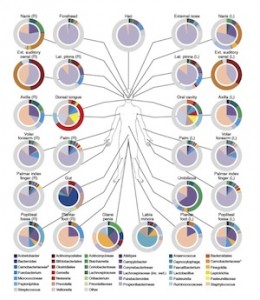
With the establishment of the Human Microbiome Project, our knowledge of the diverse span of microbial species within and across the human body has been significantly enhanced, revealing valuable insight into community niche specialization, genetic diversity, and the prevalence of indigenous opportunistic pathogens.

The human microbiome (or human microbiota) is the aggregate of microorganisms, a microbiome that resides on the surface and in deep layers of skin, in the saliva and oral mucosa, in the conjunctiva, and in the gastrointestinal tracts. They include bacteria, fungi, and archaea.

Most of the microbes associated with humans appear to be not harmful at all, but rather assist in maintaining processes necessary for a healthy body. Moreover, at specific sites on the body, a different set of microbes may perform the same function for different people.

A new article of interest, examining the implications of the Human Microbiome Project, on various facets of pharmaceutical microbiology, has been published by the American Pharmaceutical Review. The article has been written by Cara Wilder, Tim Sandle and Scott Sutton.


The article can be viewed on-line at: APR.


Posted by Tim Sandle
Special offers