Sunday, 10 August 2014

FDA guidance for the development of nanotechnology products


FDA Issues Guidance to Support the Responsible Development of Nanotechnology Products.

Three final guidances and one draft guidance were issued by the U.S. Food and Drug Administration providing greater regulatory clarity for industry on the use of nanotechnology in FDA-regulated products.

One final guidance addresses the agency’s overall approach for all products that it regulates, while the two additional final guidances and the new draft guidance provide specific guidance for the areas of foods, cosmetics and food for animals, respectively.

The guidances are:

Final Guidance for Industry: Considering Whether an FDA-Regulated Product Involves the Application of Nanotechnology
The guidance outlines overarching considerations for all FDA-regulated products, identifying points to consider when determining whether a product involves the use of nanotechnology. It is intended to help industry and others identify when they should consider potential implications for regulatory status, safety, effectiveness or public health impact that may arise with the application of nanotechnology in FDA-regulated products.Final Guidance for Industry: Safety of Nanomaterials in Cosmetics
Theguidance describes the FDA’s current thinking on the safety assessment of nanomaterials when used in cosmetic products and encourages manufacturers to consult with the FDA on test methods and data needed to support the substantiation of a product’s safety.

Final Guidance for Industry: Assessing the Effects of Significant Manufacturing Process Changes, Including Emerging Technologies, on the Safety and Regulatory Status of Food Ingredients and Food Contact Substances, Including Food Ingredients that are Color Additives
The guidance alerts manufacturers to the potential impact of any significant manufacturing process change, including changes involving nanotechnology, on the safety and regulatory status of food substances. This guidance also describes considerations for determining whether a significant manufacturing process change for a food substance already in the market affects the identity, safety, or regulatory status of the food substance, potentially warranting a regulatory submission to the FDA.

Draft Guidance for Industry: Use of Nanomaterials in Food for Animals
This draft guidance addresses issues related to the use of nanotechnology in food ingredients intended for use in food for animals. Public comments on this draft guidance are requested by September 10, 2014.

For further information, see Pharmaceutical Processing

Posted by Tim Sandle

Saturday, 9 August 2014

'Hidden diversity' of mouth bacteria

A new computational method for analyzing bacterial communities has uncovered closely related, previously indistinguishable bacteria living in different parts of the human mouth. The technique, developed by Marine Biological Laboratory (MBL) scientists, provides high taxonomic resolution of bacterial communities and has the capacity to improve the understanding of microbial communities in health and disease.

An important step in understanding the role of oral bacteria in health and disease is to discover how many different kinds live in the mouths of healthy people, and exactly where in the mouth they normally live. Using a novel computational method called oligotyping, developed by MBL Assistant Research Scientist A. Murat Eren, scientists analyzed gene sequence data from nine sites in the oral cavity. The data was provided by The Human Microbiome Project (HMP), an effort of the National Institutes of Health that produced a census of bacterial populations from 18 body sites in more than 200 healthy individuals. DNA in these samples was sequenced from the gene in bacteria that encodes ribosomal RNA, called the 16S rRNA gene, or 16S.

To this point, an understanding of the biomedical significance of HMP data has been hindered by limited taxonomic resolution. "Different species of bacteria can have very similar 16S gene sequences, sometimes differing by only a single DNA base in the region that was sequenced, and errors in DNA sequencing can also create differences of one or a few DNA bases," says the study's co-author Jessica Mark Welch, an Assistant Research Scientist at the MBL.

While the HMP data set has been used to identify bacteria broadly, to genus-level groups, it has never been used to identify bacteria more precisely, to the species level. "This genus-level grouping meant that many bacteria with similar DNA, but very different roles in the human microbiome, were lumped together, limiting the usefulness of the data," says Mark Welch. Using oligotyping, Eren, Mark Welch and their colleagues Gary Borisy of the Forsyth Institute and Susan Huse of Brown University re-analyzed the HMP 16S gene data from dental plaque, saliva, and the surfaces of the tongue, cheek, gums, hard palate, tonsils, and throat. They found closely related, but distinct, bacteria living on the tongue, on the gums, and in plaque. For example, bacteria in saliva and in hard palate, tonsils, and throat resembled the tongue bacteria, while bacteria on the cheek were similar to bacteria on the gums.

Bacteria from plaque below the gum-line also were detected on the tonsils, suggesting that the tonsils provide an oxygen-free environment where these bacteria can grow and come into contact with the human immune system. Oligotyping detected kinds of bacteria that differed by as little as a single DNA base in the sequence tag. These differences in the 16S gene did not change the properties of the bacteria, but acted as markers for larger changes elsewhere in the bacterial genome which, the researchers believe, lead to different bacterial properties that make the bacteria prefer one part of the mouth over another.

"These distinct bacteria were present in the data all along, but were indistinguishable because they were so similar to each other hidden in plain sight, and revealed by oligotyping," says Mark Welch. "This method offers a better understanding of the distribution of precisely defined taxa within the mouth, and demonstrates a level of ecological and functional biodiversity not previously recognized. The ability to extract maximum information from sequencing data opens up new possibilities for the analysis of the dynamics of the human oral microbiome." Eren has applied the oligotyping method to improve taxonomic resolution in other bacterial communities, including those from wastewater, from marine sponges, and from ocean water. The researchers say the technique has the capacity to analyze entire microbiomes, discriminate between closely related but distinct taxa and, in combination with habitat analysis, provide deeper insights into the microbial communities in health and disease. "The diversity of naturally occurring bacteria continues to impress us, and our study demonstrates that a comprehensive understanding in microbial ecology through marker genes requires our attention to subtle nucleotide variations," says Eren. "I anticipate that the ecologically important information oligotyping helped us recover from the human oral microbiome will intrigue other investigators to take a second look from their microbiome data sets."

More information: Oligotyping analysis of thehuman oral microbiome, PNAS

Posted by Tim Sandle

Friday, 8 August 2014

Progress on the UK antimicrobial resistance strategy

From: Department of Health and Dr Felicity Harvey CBE, Director General for Public Health.

Antimicrobial resistance (AMR), especially resistance to antibiotics, is a growing problem and there is now a risk that the practice of modern medicine will not be possible in the next 20 years because we have run out of effective antibiotics. I, like Dame Sally Davies, our Chief Medical Officer (CMO), am determined that will not happen, not just for us, but for future generations.


In September 2013, we published the UK Five Year AMR Strategy with the goal of slowing the growth of AMR by taking an integrated approach across human and animal health and the environment at both national and international levels. An early priority has been to agree a set of measures against which we could track progress towards our goal.

The Advisory Committee on Antimicrobial Resistance and Healthcare Associated Infections (ARHAI) and Public Health England (PHE) have worked with us to develop measures which include resistance trends in selected drug-bug combinations and improvements in the quality of prescribing in primary and secondary care.

In November we will publish our first annual progress report and a detailed implementation plan with a focus on deliverables. The annual report will describe progress across the areas that we have identified as the priorities for action in this first phase. These are better data and information, behaviour change, improved diagnostics and new treatments, enhanced research and analysis and stronger international collaboration. We, and our partners, are making good progress in each of these areas.


Progress DH has made

We have undertaken a range of analyses and modelling of the burden and potential impact of AMR on health, the NHS and the consequent economic and social costs to inform the wider programme and help assess the likely effectiveness of potential interventions to reduce AMR. We will be publishing these later this year.

To improve diagnostics we are working with experts including the Chief Scientific Officer at NHSE, Medical Microbiology experts in PHE and academia, National Institute for Health Research (NIHR) and the Medical Research Council (MRC) to establish what is needed on the ground, where there are gaps and how we can make sure that the right tests are available in the right settings across the health system.

Research is crucial to our understanding of the molecular basis of the emergence of spread of AMR, the significance of transmission pathways between the environment, humans, animals and the food supply chain in promoting the transfer of resistance in human and veterinary pathogens to help target our interventions. We also need research to help develop new drugs, alternative therapies and improved diagnostic technologies.

In April, two NIHR Health Protection Research Units, focusing on Health Care Associated Infections and AMR were established, between PHE and academic partners. A new AMR Research Funder’s Forum, led by the MRChas been set up to co-ordinate AMR related research and promote joint action to better understand the relationship between AMR in humans and animals.


The UK has been at the forefront of action internationally working with other governments and global organisations including the World Health Organization (WHO) and the World Organisation for Animal Health (OIE), to drive forward coordinated action at an international level.

I am enormously proud of our achievements on the international stage. Together with Sweden, we have led the development and adoption of a new WHO resolution on AMR. The Resolution provides a mandate for development of a WHO led global action plan by May 2015. We will have a key role in influencing and contributing to the development of the action plan and continuing to support the global movement to tackle AMR.

Progress our partners have made

To provide better data and information, PHE has been working with a wide range of bodies to strengthen our national surveillance programme, improving our ability to monitor trends in resistance and integrate data on how antibiotics are used in hospitals, GP surgeries and other healthcare settings. In September, it will publish its first annual report providing a baseline from which to monitor future trends and assess the impact of our interventions.

PHE is stepping up its work with partners across the human health and social care system, holding a workshop with experts in the summer to develop an integrated plan to deliver system wide change. NHS England, NICE and Health Education England are all supporting work to change behaviours and improve the quality of antibiotic prescribing.

The Veterinary Medicines Directorate of Defra and the Responsible Use of Medicines in Agriculture Alliance (RUMA) are undertaking comprehensive sector engagement activities to consider the issues and share good practice.

Much more to be done

However, I am not complacent and while I recognise the significant achievements on the international front, there is much more that needs to be done to deliver real change nationally to improve our infection prevention and control, better control the use of antibiotics and to support the development of new classes of antibiotics, diagnostics and new treatments.

We already have good support from the Royal Colleges and the Faculty of Public Health. This, together with RUMA’s strategy and action plan, issued in April this year, demonstrate that we in the UK are of one voice and truly working together to tackle this important issue.

We can only achieve the goal of the strategy if we continue to work together in this way. The progress report and action plan we publish in the autumn, will provide more detail about what we have and what we intend to achieve together. I call on you now, professionals, health care workers, academics and industry to keep the fight against AMR as a priority in your organisations and to continue to work with us to make those changes that need to happen to deliver our goal.

Thursday, 7 August 2014

A Role for Endotoxin in Alcoholism?

Interesting news from BioDtech:

It has previously been demonstrated that biological effects of alcoholism, including liver disease, are partially due to increased bacterial translocation due to a deterioration of gut integrity.  A recent report from scientists at the University of Massachusetts demonstrates that bacterial-induced inflammation can occur in healthy individuals with single episodes of binge drinking:


Similarly, another publication from the University of Texas indicated that endotoxin-induced inflammation promotes alcohol consumption:


Taken together, these results suggest that a single episode of binge drinking could result in endotoxin-induced inflammation and promote the desire for more alcohol.

Scientists at BioDtech, Inc. have measured previously undetectable levels of endotoxin which could cause activation of the immune system.  BioDtech products are designed to more accurately detect endotoxin and remove it from proteins and DNA.

Posted by Tim Sandle

Pharmacopeial Forum 40 (4) – items of interest

Pharmacopeial Forum 40 (4) – items of interest

Items of interest are:

General chapters

111: Design and Analysis of Biological Assays (Revision proposal target, USP38-NF33 2nd Supplement)

Completely revised after the introduction of four new general chapters pertinent to bioassays.

1223:   Validation of Alternative Microbiological Methods (Revision proposal target, USP38-NF33 2nd Supplement)

This proposed revision provides guidance on the selection and implementation of assay methodologies to serve as alternatives to compendial microbiological methods. The revised chapter describes important steps that should be taken to evaluate candidate alternative methods, to select the analytical technology, and ultimately to qualify the method with actual product. These steps include, but are not limited to, identification of a potentially suitable alternative methodology, demonstration that the method is equivalent and applicable as a replacement for a standard compendial method, development of user specifications for equipment selection, and qualification of the method in the laboratory. In addition, this chapter outlines four distinct options for demonstrating equivalence.

Posted by Tim Sandle

Wednesday, 6 August 2014

Analytical Framework For Examining The Value Of Antibacterial Products

Antibacterial resistance is a growing global problem. According to the most recent statistics from the Centers for Disease Control and Prevention (CDC), at least 2 million people acquire serious infections with bacteria that are resistant to one or more of antibacterial drugs designed to treat those infections in the United States alone. Of these, approximately 23,000 die as a result of drug-resistant infections. Even though estimates vary widely, the economic cost of antibacterial resistance in the United States could be as high as $20 billion and $35 billion a year in excess direct healthcare costs and lost productivity costs, respectively (U.S. Centers for Disease Control and Prevention, 2013).

Despite the potential of new antibacterial products to reduce the social burden associated with resistant infections, some of the large companies have been exiting the markets for antibacterial drugs and vaccines in recent years and have also failed to respond to the possible social value of opportunities in production of rapid diagnostic products. These market exits have been driven by the most basic of reasons: insufficient return to capital invested in development of these products. Consequently, governments across the globe are looking to identify ways to stimulate the development of antibacterial products.

A study, conducted by Eastern Research Group, Inc. (ERG) under contract to the U.S. Department of Health and Human Services (HHS), Office of the Assistant Secretary for Planning and Evaluation (ASPE) and partly funded by FDA, has been conducted. The develops an analytical decision-tree model framework that can be used to assess the impacts of different possible market incentives on the private and social returns to product development of new antibacterial products (in contrast to those already under development).

To view the study, go to: ERG

Posted by Tim Sandle

Tuesday, 5 August 2014

Quality Management Systems


The objectives of a Quality Management System are to:
  • Set direction and meet customers' expectations
  • Improve process control
  • Reduce wastage
  • Lower costs
  • Increase market share
  • Facilitate training
  • Involve staff
  • Raise morale
The basis of a Quality Management System is set out in: ISO/FDIS 9001:2008 — Quality management systems — Requirements.
The adoption of a QMS needs to be a strategic decision of an organisation, and is influenced by varying needs, objectives, the products/services provided, the processes employed and the size and structure of the organisation. A QMS must ensure that the products/services conform to customer needs and expectations, and the objectives of the organisation. Issues to be considered when setting up a QMS include:
  • Design and build includes the structure of the quality management system, the process and its
  • implementation. It's design must be led by senior managers to suit the needs of the organisation, and this is ideally done using a framework to lead the thinking. Design of the QMS should come from determining the organisation's core processes and well-defined goals and strategies, and be linked to the needs of one or more stakeholders. The process for designing and building the QMS must also be clear, with the quality function playing a key role, but involvement and buy-in to the system must also come from all other functions.
  • Deployment and implementation is best achieved using process packages, where each core process is broken down into sub-processes, and described by a combination of documentation, education, training, tools, systems and metrics. Electronic deployment via Intranets is increasingly being used.
  • Control of the QMS will depend on the size and complexity of the organisation. ISO is a site-based system, and local audits and reviews are essential even if these are supplemented by central reviews.
  • Local control, where possible, is effective, and good practice is found where key stakeholders are documented within the process and where the process owner is allowed to control all of the process. Ideally, process owners/operators are involved in writing procedures.
  • Measurement is carried out to determine the effectiveness and efficiency of each process towards attaining its objectives. It should include the contribution of the QMS to the organisation's goals; this could be achieved by measuring the following:
    • Policy definition completeness
    • Coverage of business
    • Reflection of policies
    • Deployment
    • Usage
    • Whether staff find the QMS helpful in their work
    • Speed of change of the QMS
    • Relevance of QMS architecture to the job in hand
A form of scorecard deployed through the organisation down to individual objective level can be employed, and the setting of targets at all levels is vital.
Review of the effectiveness, efficiency and capability of a QMS is vital, and the outcome of these reviews should be communicated to all employees. Reviewing and monitoring should be conducted whether or not improvement activities have achieved their expected outcomes.
Improvement should follow as a result of the review process, with the aim of seeking internal best practice. It is part of the overall improvement activities and an integral part of managing change within the organisation.
An effective QMS must ensure that the organisation has a strong Customer Focus. Customer needs and expectations must be determined and converted into product requirements. Top management have to demonstrate Leadership. Providing unity of purpose through an appropriate quality policy, ensuring that measurable objectives are established, and demonstrating that they are fully committed to developing, sustaining and improving the QMS.
Managers must ensure that there is Involvement of People at all levels in the organisation. This includes ensuring that there is an awareness of the importance of meeting customer requirements and responsibilities in doing this, and people are competent, on the basis of appropriate training and experience.
An effective QMS must be a strategic tool designed to deliver business objectives, and must have, at its core, a Process Approach, with each process transforming one or more inputs to create an output of value to the customer. The key business processes may be supported by procedures and work instructions in those cases where it is judged necessary to rigidly define what rules are to be followed when undertaking a task. Most organisations will have core business processes that define those activities that directly add value to the product or service for the external customer, and supporting processes that are required to maintain the effectiveness of the core processes.
The understanding of the many interrelationships between these processes demands that a Systems Approach to management is adopted. The processes must be thoroughly understood and managed so that the most efficient use is made of available resources, to ensure that the needs of all the stakeholders — customers, employees, shareholders and the community — are met.
Customer satisfaction is a constantly moving entity depending on changes in technology and the market place, so an effective QMS must be in a state of Continual Improvement. For this to be achieved, attention needs to be given to both the voice of the customer - through complaint analysis, opinion surveys and regular contacts – and the voice of the processes – through measurement, monitoring and analysis of both process and product data. This will result in Factual Decision Making.
Each organisation is itself only a link in the chain of a larger raw material process, and for the long term needs of the community and the organisation there needs to be Mutually Beneficial Supplier Relationships.
Audits, reviews and assessments

A good QMS will not function or improve without adequate audits and reviews. Audits are carried out to ensure that actual methods are adhering to the documented procedures, whilst system reviews should be carried out periodically and systematically, to ensure the system achieves the required effect.
There should be a schedule for carrying out audits, with different activities possibly requiring different frequencies. An audit should not be conducted just with the aim of revealing defects or irregularities – they are for establishing the facts rather than finding faults. Audits do indicate necessary improvement and corrective actions, but must also determine if processes are effective and that responsibilities have been correctly assigned. The emphasis on process improvement and enhancing customer satisfaction in the revised standard will require a more thoughtful approach to auditing.

The generic steps involved in an audit are:
  • Initiation
    • Scope
    • Frequency
  • Preparation
    • Review of documentation
    • The programme
  • Working documents
    • Execution
  • Opening meeting
    • Examination and evaluation
    • Collecting evidence
    • Observations
  • Close the meeting with the auditee
  • Report
    • Preparation
    • Content
    • Distribution
    • Completion
    • Report
    • Submission
    • Retention
A quality management system review should take place, possibly once a year, which should cover:
  • Results of audits
  • Customer feedback
  • Process and product conformity
  • Status of preventative and corrective actions
  • Follow up actions from previous management reviews
  • Changes that could effect the QMS
  • Recommendations for improvements
  • Outputs should include:
  • Improvements to the QMS and processes
  • Improvements of a product related to customer requirements
  • Resource needs
In addition, the procedures for conducting audits and reviews and the results from them should be documented, and also be subject to review. Internal system audits and reviews should be positive and conducted as part of the preventative strategy, and not as a matter of expediency resulting from problems. The assessment of a quality system against a standard or set of requirements by internal audit and review is known as a first-party assessment or approval scheme. If an external customer makes the assessment of a supplier, against either its own, or a national or international, standard, a second-party scheme is in operation. The assessment by an independent organisation, not connected with any contract between the customer and supplier, but acceptable to them both, is an independent third-party assessment scheme.
All managers, not just the staff in the "quality department", need to be fully committed to operating an effective quality management system for all the people within the organisation. The system must be planned to be effective and achieve its objectives in an uncomplicated way. It should also not be static, but be flexible, to enable constant seeking of improvements
Quality Management Review

The object of the Quality Management Review is to provide an overview of the results from the Quality Control and Quality Assurance functions. The review forms part of an organization's Quality Management Systems (as detailed in ISO 9001). The issues covered will vary between different workplaces. However, issues often included issues are results of audits; discussions of follow up items; a review of progress relating to non-compliances and discussions relating to the effectiveness of corrective and preventative action; test and sampling efficiency times; customer complaints; rejects; out of specification results from test data; microbiological contamination issues and trends in relation to processing of product and to the manufacturing environment. Issues of major concern are often considered using risk management techniques.
Data is presented by participants from different departments. The data is normally measured against a target (to allow for effectiveness, efficiency and capability to be measured). This can be relatively straightforward, such as the number of internal audits completed against a target level (such as 95% of audits to be completed to schedule) or more complex when relating to statistical process control charts for laboratory test data.
Participants will include representatives of laboratories, production, process, pharmacy and ward management. Meetings are held either monthly, quarterly or annually (at my workplace, the meetings are held quarterly).
Where problems or upward trends are identified the aim of the meeting is to identify the risk, assign a priority, to agree actions and to track progress. For issues that cannot be satisfactorily dealt with these are referred to senior management. Quality Management Review meetings may sometimes elect to form subgroups to examine specific areas, such as sampling; new processes technologies and so on.
It is important that the outcomes of the Quality Management Review are communicated to all members of staff.

Posted by Tim Sandle

Monday, 4 August 2014

What Are Prions?

A prion is short-hand for proteinaceous infectious particle. Prions are infectious proteins thought to cause disease as viruses do (prions are misfolded, misshapen, proteins). The key difference between a prion and a virus is that prions lack the DNA or RNA that forms the command structure of a virus. Prions have been implicated with a number of diseases, including scrapie, kuru (once called laughing sickness), Creutzfeldt-Jakob disease, and in Bovine Spongiform Encephalopathy (BSE) (the so-termed Mad Cow Disease). Mad-cow disease involves prions which have been passed between cattle by eating feed containing (or contaminated with) brain matter from infected animals, and can then be passed on to humans who eat the similarly contaminated meat of infected cattle. There was an outbreak of this disease in British cattle in the 1980s.
The prion proteins contradict a central tenet of molecular biology: that genes affect proteins, but proteins do not affect DNA. To date, any known disease transmitted by prion is untreatable. Prions attack the nervous system, particularly the brain. Once in an animal's brain cells, proteins near the prions apparently begin to deform and refold themselves to match the defective prion. In sheep, scrapie-infected animals stagger and die as their brains disintegrate. With BSE, humans suffer a hideously similar fate.

Posted by Tim Sandle

Pharmacopeial Forum 40 (3) – items of interest

Pharmacopeial Forum 40 (3) – items of interest

Items of interest are:

General chapters

202:     Identification of Fixed Oils by Thin-Layer Chromatography (Revision proposal target, USP38-NF33 1st Supplement)

A new chapter to determine the identity of fixed oils to be used as an orthogonal test in the Identification section of the monograph. The chapter has been harmonized with the European Pharmacopoeia general chapter 2.3.2. Identification of Fatty Oils by Thin-Layer Chromatography.

1010:   Analytical Data- Interpretation and Treatment (Revision proposal target, USP38-NF33 1st Supplement)

Revision of this chapter is proposed. In Use of Reference Standards new text is introduced to clarify the use of secondary Reference Standards. A new Appendix F is being added to explain the use of two one-sided tests (TOST) to assess equivalency of analytical procedures. The term “method”, when referring to analytical testing, has been replaced by “procedure” throughout the document to align with current USP terminology.

1029:   Good Documentation Guidelines (Revision proposal target, USP38-NF33 1st Supplement)

This proposed new general chapter provides guidelines on how to develop and maintain good documentation practices within Good Manufacturing Practice (GMP) operations.

1228.1: Dry Heat Depyrogenation (Revision proposal target, USP38-NF33 1st Supplement)

Parenteral products not only need to be sterile, but also free from harmful levels of pyrogens, or fever-causing agents. For an overview of depyrogenation, see general information chapter Depyrogenation 1228. Of the several modes of depyrogenation, dry heat is employed for the depyrogenation of heat stable materials. Dry heat depyrogenation is a temperature- and time-dependent process. Depyrogenation using dry heat can be accomplished in a batch oven mode or in a continuous process using a tunnel system. Depyrogenation in ovens is typically performed at temperatures in excess of 170°. Tunnels for depyrogenation ordinarily operate at higher temperatures. This new chapter proposal provides an overview of the process, routine process control, and its validation.

Posted by Tim Sandle

Sunday, 3 August 2014

Identifying Microbial Contamination


Understanding the diversity of microflora is of importance for the pharmaceutical microbiologist. Knowing the potential origins of different micro-organisms can indicate the potential source of contamination. Knowing the species of a microorganism can provide invaluable information as to its origins. For example, many Gram-positive cocci are part of human skin flora, Gram-positive rods can be transferred into clean areas via equipment and on footwear, and Gram-negative rods are often linked to water sources. Such characterisations are important for various root cause analyses, such as linking contamination from surfaces to intermediate product, determining if contamination could have arisen from personnel intervention, or understanding if a sterility test failure is due to product contamination or is a false positive.
Furthermore, there is also considerable cGMP emphasis upon screening for objectionable micro-organisms. The impact of micro-organisms upon product quality attributes will depend on the product, its intended or potential application, method of manufacture, and subsequent treatment if applicable. In addition, monitoring for changes in microbial trend can indicate a possible problem emerging within the clean area environment, such as reduction in cleaning and disinfection standards. This is outlined in the FDA Code of Federal Regulations, which state:

"Where environmental conditions could reasonably be expected to have an adverse effect on product quality, the manufacturer shall establish and maintain procedures to adequately control these environmental conditions."
Microorganisms found in pharmaceutical ingredients, water for pharmaceutical use, the manufacturing environment, intermediates, and finished products are frequently identified (‘speciated'). This is especially common if their numbers exceed alert and or action levels for the material or process environment tested. The method of identification is based on the needs of the microbiologist. In some circumstances to know that a micro-organism is a Gram-positive coccus can be sufficient (where, the differentiation between a Staphylococcus and a Micrococcus) is of little relevance when evaluating what is found in a cleanroom. In other circumstances, a phenotypic identification is undertaken so that the microbiologist can understand the general profile for microorganisms. In more specific circumstances such as where a sterility test has failed a close genetic match between the sterility test contaminant and cleanroom microflora may be sought.
Methods

Colony and cell morphology

The first step of most identification schemes is to describe the colony and cellular morphology of the microorganism. Colony morphology is normally described by directly observing growth on agar, where the colony will appear as a particular shape (such as raised, crenated, spherical and so on) and the colony will have a particular pigment. Some microbiologists will attempt to identify the microorganism based on such visual identification. This is not normally encouraged as considerable experience is required to do this and the variety of microflora cannot be characterised with any degree of accuracy. Furthermore, the characteristics of a microorganism are often dependent upon the type of culture medium used. Nevertheless, a description of the morphology can assist with further stages of identification.


Cellular staining provides important information relating to the composition of the microbial cell wall, as well as the shape of the organism.
Staining

Gram-stain

The primary staining technique used to differentiate bacteria is the Gram stain. The Gram stain method employed includes the four-step technique: Crystal violet (primary stain); iodine (mordant); alcohol (decolorizer); safranin (counter stain) or the three-step method in which the decolorization and counter-staining step are combined. Done correctly, Gram-positive organisms retain the crystal violet stain and appear blue; Gram negative organisms lose the crystal violet stain and contain only the counter-stain safranin and thus appear red. Common pitfalls in this method are that heat fixation may cause Gram-positive cells to stain Gram-negative and older cultures may give Gram-variable reaction; using too much decolorizer could result in a false Gram-negative result and not using enough decolorizer may yield a false Gram-positive result.
The Gram reaction is based on the differences in the cell wall composition for the two cellular ‘groups'. The bacteria that retained the stain (the Gram-positive bacteria) have a higher peptidoglycan and lower lipid content than those that do not retain the stain (the Gram-negative bacteria). The effect of the solvent is to dissolve the lipid layer in the cell wall of the Gram-negative bacteria, thereby causing the crystal violet to leach out; whereas for Gram-positive bacteria the solvent dehydrates the thicker cell walls, blocking any diffusion of the violet-iodine complex, which closes the pores of the cell and retains the stain. There are now several automated Gram stain devices available on the market that can reduce the labour requirement required when performing several multiple Gram stains and, possibly, improve accuracy.
In addition to the difference based on cell wall, microscopic examination of the stains allows the cellular shape to be determined. Bacteria commonly fall into the categories of coccus (spherical), rod, vibrio (curved), spirilla (spiral) and plemomorphic (variable).
Spore stain

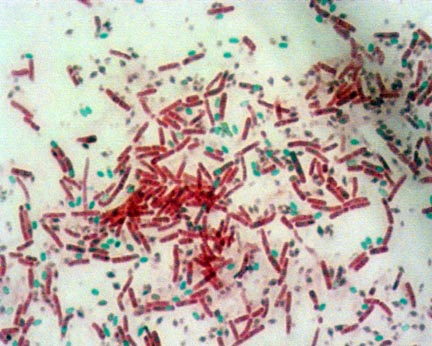
Some bacteria, such as species of Bacillus, form endospores. Knowing if spores are present can help to characterise such organisms. Common spore staining methods employed include a two-step method: malachite green (primary stain) and safranin (counter stain). The fixed bacterial smear is stained with 7.6% aqueous malachite green solution for 10 minutes (sometimes this is facilitated by ‘steaming' the stain), rinsed, and counter stained with a 0.25% aqueous safranin solution for 10 seconds, rinsed, and blotted dry. This procedure stains the spores green, but the rest of the bacterial cell is stained red.


Fungal staining

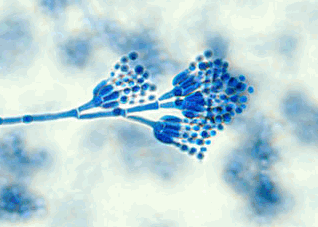
Lactophenol Cotton Blue Stain is used in wet mounts for microscopically examining yeast and filamentous fungi and serves as both a mounting fluid and stain. Staining the specimen light blue allows subtle features such as septa, special mycelia and spore structures to be easily visualized by microscopy. The majority of fugal identifications are undertaken based on the morphological characteristics of the stain and growth on solid media.


Biochemical profiling

Once the cellular characteristics have been reported, the second stage of identification is to identify the genus and species of bacteria. The most common techniques used, based on their costs and long history, are biochemical tests.
Key biochemical screening tests, which aid the further differentiation of bacteria, include the oxidase test to separate Gram-negative rod-shaped bacteria into nonfementers (oxidase positive) and enteric (oxidase negative) bacteria; the catalase test to separate Staphylococci (catalase positive) from Streptococci (catalase negative), and coagulase test to separate Staphylococci into coagulase negative (presumptively nonpathogenic) and coagulase positive (more likely pathogenic) Staphylococci (like S. aureus).
Phenotypic reactions typically incorporate reactions to different chemicals or different biochemical markers. These rely on the more subjective determinations. The reliance upon biochemical reactions and carbon utilization patterns introduces some disadvantages to the achievement of consistent (repeatable and reproducible) identification. However, these are mature technologies, such as the API strip, that are marketed by multiple companies as consistent, pre-packaged kits with well-established quality control procedures often with instrumentation with extensive databases to identify the most commonly encountered microorganisms found in the pharmaceutical industry. The API strip is basically a pre-packaging of the standard methods of a series of test tubes into a convenient bubble-wrap design. This method was further refined with the VITEK automated systems which miniaturised the process. An alternative method is the Biolog, which uses a 96-well plate containing different carbohydrate sources and a reaction dye to produce as so-called ‘metabolic fingerprint'. Other variations include fatty acid analysis through the use of gas chromatography.
RNA and DNA homology


In contrast to the phenotypic methods genotypic techniques are more accurate. This is because the microbial genotype is highly conserved and is independent of the culture conditions, so the identifications may be conducted on uncultured test material-primary enrichments that increase the amount of nucleic acid available for analysis. Genotypic microbial identification methods based on nucleic acid analyses are less subjective, less dependent on the culture method, and theoretically more reliable.

Posted by Tim Sandle

PhotoScribe Laser Marks Pills for Pharmaceutical Industry with Speeds Exceeding 410,000 Pills per Hour

The LMCP-100 Extreme Laser by PhotoScribe Marks Pills at Record-Breaking Speed.


PhotoScribe Technologies, the global leader in the manufacturing of laser systems, has impressed the pharmaceutical industry by developing the fastest laser for micro-marking pills on the fly. Marking at speeds exceeding 410,000 pills per hour, the efficiency of the laser’s marking operation reduces both cost and down time for companies looking to increase productivity in a tangible way.


Lasers have made inroads into the pharmaceutical industry over the past decade, primarily in the marking of unique IDs on packaging, security control, tracking, direct pill marking and drilling. There has been a tremendous development and significant improvement in the capabilities of lasers, they are easier to operate, don’t require laser expertise, and have intuitive software with a friendly user interface.

Pills in pharmaceutical industry have been traditionally printed a process that is messy, problematic and uses solvents, PhotoScribe’s LMCP-100 Extreme laser provides a fast, single process, non-contrast marking. No consumables are required. Allows for extremely high speeds, while maintaining a low cost of operation. Flexibility is key, with the operator having the ability to change marks without the need to change printing rollers. The LMCP-100 Extreme laser has the ability to serialize and change a mark on the fly during the marking process. Because multiple marking files can be saved, the process gives a renewed sense of ease to marking, while also reducing the cost of high quality printing and drilling.

With the ability to mark exceeding 410,000 pills an hour for the dual head laser system, PhotoScribe CEO David Benderly states, “We have reached a point where the laser marking is no longer the bottleneck of production. Laser speed and flexibility allow us to change marks based on batch number or even down to the single pill level. With all of its other benefits, I have no doubt that lasers will become the dominant technology for Pharmaceutical marking and identification.”

Benefits to using lasers in the pharmaceutical industry include applications such as the marking of text, logos, graphics and barcodes. For PhotoScribe, the development of fast lasers for the drilling and marking of pills is a primary focus for technological innovation. By developing lasers that continue to break barriers in speed and efficiency, PhotoScribe Technologies is evolving industry productivity.

About PhotoScribe Technologies:

Founded in 1998, PhotoScribe Technologies is headquartered in New York, NY with offices in Minnesota and manufacturing in Germany. PhotoScribe Technologies designs, builds, installs and services turn-key laser systems primarily for direct part micro-marking and micro-machining applications in a variety of industries.

The company focuses on manufacturing lasers for extreme conditions such as micro-scale marking, hard, transparent and brittle material processing and extreme speed mark-on-the-fly applications. PhotoScribe has set the industry standard for high contrast and transparent inscriptions on diamond for over 10 years with their “cold” Excimer laser technology, and is considered the world leader in marking materials that are challenging to mark (for example, due to transparency, brittleness or sensitivity to temperature).
Posted by Tim Sandle

Saturday, 2 August 2014

International action on Ebola

As health officials in West Africa continue their efforts to contain the region’s deadly Ebola outbreak, the World Health Organization (WHO) has announced a $100 million response plan to supply the affected countries of Guinea, Liberia, and Sierra Leone with needed resources, including “several hundred more personnel . . . to supplement overstretched treatment facilities,” according to a WHO statement.

The US Centers for Disease Control and Prevention (CDC) has also announced that it is sending around 50 of its experts to West Africa to assist in outbreak containment efforts.

Since March, there have been more than 1,300 confirmed and suspected cases of Ebola virus disease reported, including 729 deaths.

Ebola virus disease (EVD) or Ebola hemorrhagic fever (EHF) is the human disease which may be caused by any of four of the five known Ebola viruses. The name comes from Ebola River in Republic of the Congo, where it was first found. One of the common signs of the disease is bleeding from mucous membranes and puncture sites. It is normally fatal.

The World Health Organization (WHO) states that the infection gets into humans through close contact with the blood, secretions, organs and other bodily fluids from a number of species including chimpanzees, gorillas and forest antelope.

“Ebola is worsening in West Africa,” CDC Director Thomas Frieden told reporters on Thursday. Containing the outbreak, he added, is “not going to be quick, it’s not going to be easy, but we know what to do.”

Frieden noted that “Ebola poses little risk to the U.S. general population.” As a precautionary measure, his agency has issued a Level 3 travel warning, advising travelers not to visit the three countries at the center of the outbreak unless absolutely necessary.

There is no vaccine to prevent Ebola virus disease, and no specific treatments for it. Tekmira Pharmaceuticals’s RNA interference (RNAi)-based drug, “TKM-Ebola,” is the only candidate to have reached clinical trials, but the US Food and Drug Administration (FDA) put the firm’s Phase 1 trial on hold in early July, pending additional safety data. In a July 21 press release, Tekmira said it anticipates moving forward with the trial by the fourth quarter of this year.


Posted by Tim Sandle

Science And The iPhone

If you have an iphone, then the following applications ("apps") have proved useful to scientists:
  • Analog Scientific Calculator: This retro calculator replicates the Mannheim Slide Rule used by scientists, engineers and students for over a century.
  • Chemical Elements: View all the chemical elements in two interfaces with general features of all the elements included
  • iFXRates Currency Conversion Calculator: Use this app to calculate currency conversion rates between the most popular currencies. Calculate currency conversion rates between the most popular currencies.
  • Physics Dictionary: Tap into definitions and meanings of common terms. A quick reference which is useful for Physics exams and tests.
  • PhysOrg.com Science and Technology News: Learn about physics, earth science, medicine, nanotechnology, electronics, space, biology, chemistry, computer sciences, engineering, mathematics and other sciences and technologies through this powerful free app.
  • Scientific Calculator: This easy-to-use calculator contains advanced functions — cosine, sine, tangent, square root, exponents and more
  • Unit Converter: This app contains the most common units of measurement used in the United States and Europe, for area, speed, distance, temperature, volume and more Weighted Attribute Balance Evaluator: This app allows users to make decisions based upon comparative analysis by listing weighting or valuing pros and cons on a single grid.
Posted by Tim Sandle

Friday, 1 August 2014

How plastics have transformed medical science

Wherever you are reading this blog, you are bound to be surrounded by items made from or at least containing plastic. Since their introduction in the early decades of the 20th century, these materials have had a transformative effect, completely changing the look and feel of the world around us. Many forms of plastic have become household names. For example, most people have heard of polyethylene, polyester, acrylic and polyvinyl chloride (PVC).

One area in which plastics have had a particularly noteworthy impact is medical science. These materials are used in myriad ways across the healthcare industry, from lab research to patient care.

Properties

It’s little wonder that medical and pharmaceutical companies have turned to plastics. After all, these materials possess a variety of attractive properties. For example, plastics have a relatively low density, meaning they are lightweight. Despite this fact, they can be extremely strong. In addition, the materials offer excellent thermal and electrical insulation and they are corrosion resistant to many substances that can harm other materials.

Plastics are easy to shape too, making them ideal for the manufacturing process. Furthermore, they can be treated to display a range of visual qualities. Depending on the requirements of manufacturers, they can be transformed into different colours or made transparent. They are also often cheaper than alternative materials.

When selecting plastics, medical and pharmaceutical firms can opt for versions that exhibit the perfect traits for the particular uses they have in mind. For example, high density polythene is hard, stiff and able to be sterilised, making it ideal for plastic bottles and tubing. Meanwhile, polypropylene is light, tough and has good resistance to chemicals. These characteristics make it a popular choice for medical and laboratory equipment. PVC is another favourite among healthcare companies. This is seen as a safe and cost effective material for a range of packaging solutions.

Uses

There are too many uses of plastics in the medical sector to list here, but some of the most important include intravenous bags, surgical gloves, tubing, syringes, petri dishes and bottles. The materials also make up key components in a range of prosthetic devices and they can be utilised as artificial hips and knees. Other common uses include braces, glasses frames and contact lenses.

Additionally, plastics are used to create sealed, tamper-evident packaging and to produce child-resistant caps for medicines.

Much of the complex equipment now used in labs and medical units, such as MRI machines and defibrillators, are crafted using plastics too.

An immeasurable contribution

In an article entitled ‘Plastics - No Need To Apologise’, which was featured in the Trends in Polymer Science journal, chemistry expert Norman Billingham summed up the vital role that plastics have played in the field of healthcare. He remarked: “From packaging materials, through fibres, foams and surface coatings, to continuous extrusions and large-scale mouldings, plastics have transformed almost every aspect of life. Without them, much of modern medicine would be impossible.”

He added: “Plastic sewage and water pipes alone have made an immeasurable contribution to public health worldwide.”

Looking to the future

Plastics are certainly here to stay. Their impressive qualities are simply irresistible to designers and manufacturers operating in the medical and pharmaceutical industries. As organisations continue to find new ways to harness the power of plastics, we can look forward to evermore advanced and interesting uses of the materials.

When companies are on the lookout for plastics, they can now turn to top-quality providers such as  A.I. International.

Posted by Tim Sandle

EMA opens clinical trial reports for independent scrutiny

Clinical trial reports include massive amounts of data on an investigational therapy, but they are rarely made available for independent researchers to analyze. In a move toward greater transparency, the European Medicines Agency (EMA) has been working on a policy to make these reports more readily available. The agency has announced that its management board had updated the rules to make accessing the reports more user-friendly, allowing researchers to download them.
Posted by Tim Sandle

Special offers